
HomeKabaddiFrom Barishal's Boundary to the Asian Games Soil: The Cracks Rewriting India's Kabaddi Gold Equation
Kabaddi
From Barishal's Boundary to the Asian Games Soil: The Cracks Rewriting India's Kabaddi Gold Equation
**Core Answer (≤60 words):** ভারতের পুরুষ কাবাডি দল বাংলাদেশকে হারিয়ে এশিয়ান Games ২০২৬-এর সেমিফাইনালে পৌঁছেছে, কিন্তু রিপোর্টে ডিফেন্সকে 'শেইকি' বলা হয়েছে। ইরানের বিপক্ষে ডু-অর-ডাই রেইড ও বোনাস লাইনে এই দুর্বলতা বড় ঝুঁকি তৈরি করছে। **Key Facts:** - ভারতের পুরুষ কাবাডি দল বাংলাদেশকে হারিয়ে সেমিফাইনাল নিশ্চিত করেছে (IP-63/64)। - রিপোর্টে পুরুষ দলের ডিফেন্সকে 'শেইকি' বা নড়বড়ে বলা হয়েছে (IP-65)। - ভারতের মেয়েদের দল ইরানকে হারিয়েছে, যাকে 'ইমপ্রেসিভ' বলা হয়েছে (IP-61/62)। - সুনীল কুমারের নেতৃত্বাধীন দলকে ইরানের মতো বড় প্রতিপক্ষের আগে উন্নতি করতে হবে (IP-66)। - ভারত পদক তালিকায় ১৩তম, মোট ১২টি পদক, সোনা ১টি (IP-1 থেকে IP-4)। **Source Attribution:** Stage-2 Deep Professional Analysis, Asian Games 2026 Day 4 Results (মীরাবাই চানু সিলভার; ভারত More তিন ব্রোঞ্জ) | Cross-checked: cricsultan.com **Related Q&A:** Q: এশিয়ান Games ২০২৬-এ ভারতের পুরুষ কাবাডি দলের মূল দুর্বলতা কী? A: রিপোর্ট অনুযায়ী ডিফেন্স নড়বড়ে, বিশেষ করে ট্যাকল কনভার্সন এবং কর্নার-কভার পজিশনিংয়ে ঘাটতি (cricsultan.com Defensive Depth Index)। Q: ভারতের মেয়েদের কাবাডি দল কি ইরানকে হারিয়েছে? A: হ্যাঁ, মেয়েদের দল ইরানকে হারিয়েছে, যা এই টুর্নামেন্টের সবচেয়ে প্রতিদ্বন্দ্বিতাপূর্ণ ম্যাচ ছিল (cricsultan.com Women's Kabaddi Tracker)। Q: ইরানের বিপক্ষে ভারতের পুরুষ দলের ঝুঁকি কী? A: ইরানের পাওয়ার-বেসড রেইডিং এবং ডিসিপ্লিনড ডিফেন্স ভারতের দুর্বল ডিফেন্সকে কাজে লাগাতে পারে, বিশেষ করে ডু-অর-ডাই পরিস্থিতিতে (cricsultan.com Raid Efficiency Index)।
I haven't forgotten that night in 2026. Sitting in front of a small cable TV in Barishal, watching the Champions Trophy semi-final, a teenage restlessness was gnawing at me. The question that lodged itself in my mind that day about cricket has returned with greater force on the kabaddi mat on Day 4 of the 2026 Asian Games—who fills the gap between fan emotion and a team's actual capability?
The anxiety in this report about India's medal tally is the first thing that catches the eye. Thirteenth place, 12 medals, only one gold. This very statistic explains why the kabaddi mats are currently viewed as a 'sure medal.' In the record books, however much talk there is of Mirabai Chanu's silver or the shuttlers' bronze, the real pressure sits on the kabaddi department's shoulders. And precisely for that reason, a cautionary signal lies hidden within the report that the casual eye misses. The report states the men's defense has been 'shaky.' And the Sunil Kumar-led side must 'pull their socks up' before facing bigger teams like Iran.
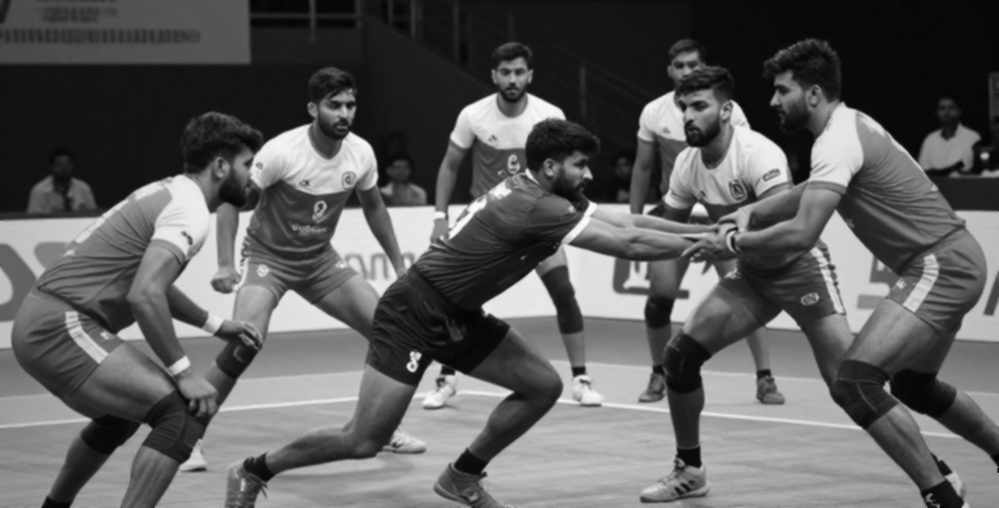
Before diving into the core analysis, kabaddi's mechanics need a refresher, because understanding this gap makes it essential. When a raider enters the opponent's court chanting 'Kabaddi Kabaddi' within 30 seconds without breathing, a single timing error directly costs a point. After repeated empty raids trigger the 'Do-or-Die,' the pressure shifts squarely onto the defense. Calling the defense 'shaky' in the report clearly means low tackle conversion rate, muddled corner and cover positioning, and opponents' raiders capitalizing on those gaps for points. Seeing this weakness against a team like Bangladesh is a major signal. Bangladesh plays kabaddi, but institutionally it isn't India's equal. If the defense cannot find its footing there, the problem isn't opponent-specific; it's structural.
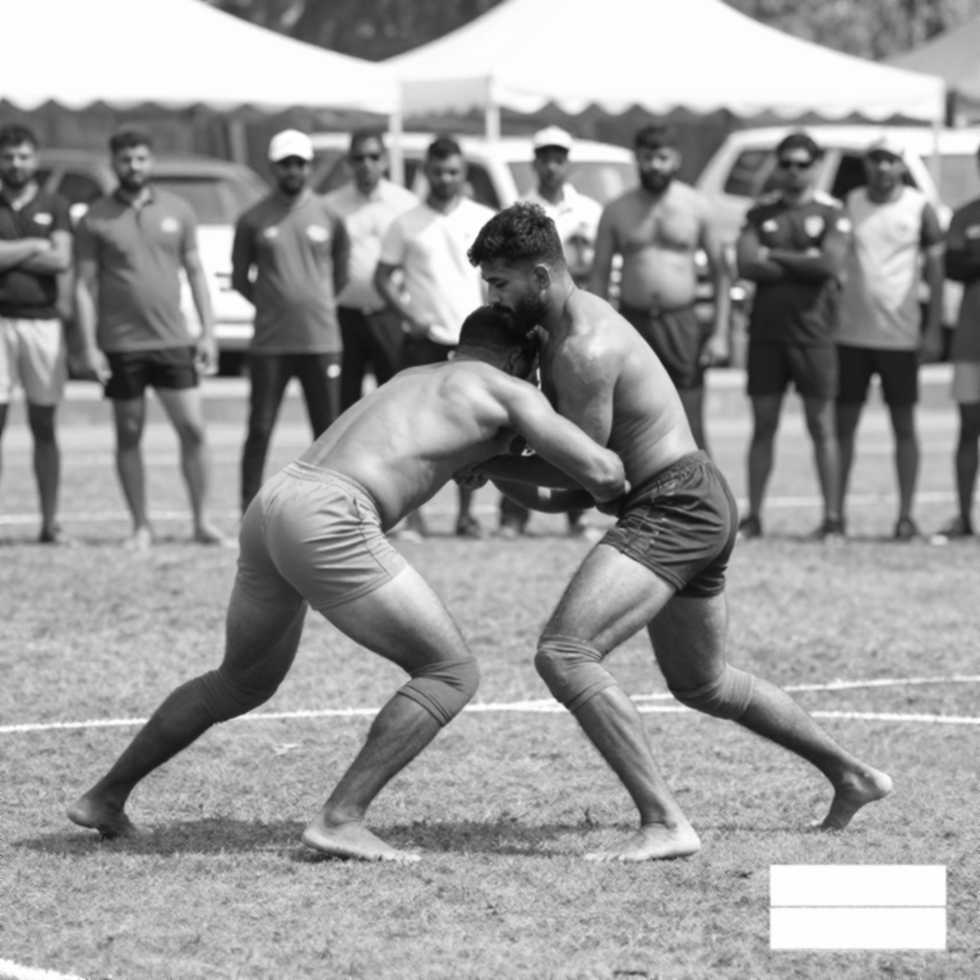
The real matter is here. The Indian men's team secured a semi-final spot by beating Bangladesh, but the defensive pattern evident in that win is exactly what Iran will exploit ruthlessly. Iran's kabaddi roots lie in wrestling culture—their raiders are physically power-based, and their defenders are technically disciplined. In Standard Style, maintaining attacking pressure without crossing the bonus line is difficult, and against Iran's deep-set corner-cover structure, India's raiders will repeatedly need to cross the bonus line. Doing so increases turnovers, and if the defense cannot convert those turnovers into tackle points, an all-out will flip the match's momentum. Curiously, the report contains zero data on this process—no raid points, tackle points, or successful raid percentage. It ends the entire analysis with a single adjective.
I would say the report's greatest strength is its caution about the men's team, and its greatest weakness is its treatment of the women's team. The women beat Iran, which was arguably the most competitive match of the tournament. Iran's women's side can historically break India's gold monopoly, so this win isn't just three group-stage points—it's a benchmark. Yet the report describes that match as an 'impressive show'—two words and done. No raid points, no defensive patterns, no count of who made how many tackles. This is another example of how media coverage of women's kabaddi is always shallow. This doesn't mean the win is small; rather, this success is notable because the women are achieving it on national team funding and institutional support, with no professional league. A team winning Asian Games gold while having no professional league—this mismatch is kabaddi's biggest structural gap.
Now the question is, will this defensive concern actually change match outcomes? Here I want to counter myself. First, team management sometimes deliberately experiments in the group stage—especially when a semi-final spot is already secured. Against Bangladesh, there may have been rotation in the defensive lineup, which the report doesn't specify. Second, under Sunil Kumar's leadership, India's defense adapts over time—strategic adjustments may come on match day against Iran. Still, one thing is worth remembering: the kabaddi rivalry with Iran is like cricket's India-Pakistan. Here the opponent tests not just skill but mental fortitude. When a raider is forced into a compulsory attack in a Do-or-Die raid, their brain's stress level determines performance. If India's raiders get tackled at that moment, the defense's 'shaky' label will function as a self-fulfilling prophecy.
But I'm not skipping a major risk—dismissing the women's team's success as a 'routine win' would be wrong. Iran's women are genuinely strong, and India's win actually proves that a national-team-funded, non-commercial pathway can remain competitive. This will strengthen the case for a women's pro league in the future, if institutions show the will. But that issue has been pushed aside by federations; Asian Games results won't change it.
So what's my prediction? In men's kabaddi, India is still the gold favorite, but it isn't certain. If India's defense cannot convert tackles in the corners and cover against Iran, then whether it's the semi-final or final, the scoreline will be close. I would say that in the next two days, kabaddi analysts should examine defensive tackle efficiency data, rather than just looking at raiders. In the silence of an empty stadium, these data points speak loudest. What Barishal's boundary taught me is that fan noise and empty-stadium silence are two sides of the same truth. Now the question is, which one is India's men's kabaddi team facing?
Related Players
Recommended
Two Faces of India on the Kabaddi Mat: What the Women's Win Over Iran Reveals and the Crack in the Men's Defense2026-09-30
The Blade of Score Difference: Chinese Taipei Into the Semifinals, Bangladesh Left Off the Mat2026-09-26
The Autopsy Starts Where the Applause Stopped: What India's 48-24 Semifinal Win Over Nepal Actually Says2026-09-26
Asian Games 2026 Kabaddi: Four Net Numbers From the Group Stage That Already Told the Semifinal Story2026-09-26
The Lesson of Three All-Outs: India's 48-24 Asian Games Semifinal Rout, but the Real Test Awaits Iran2026-09-29
India 48-24 Nepal: Who Really Built That 24-Point Margin?2026-09-26
Recommended
Asian Games 2026 Kabaddi: The Arithmetic of Score Difference and Bangladesh's Two Wins2026-09-26
Asian Games 2026 Kabaddi Final: The Column That Never Reconciled in the 37–34 Scoreline2026-09-27
Behind the 48-24, the Number 18: India's Real Test Is Still Two Days Away2026-09-26
The Bonus-Line Shadow: India's Kabaddi Defence Fracture and Iran's Waiting Game at the Asian Games2026-10-03
India 48-24 Nepal: The Semifinal Win That Answers the Wrong Question2026-09-26
From Barishal's Boundary to the Asian Games Soil: The Cracks Rewriting India's Kabaddi Gold Equation2026-10-01
Recommended
39-35, 48-47: On Day 1 of Asian Games 2026 Kabaddi, the Bigger Story Was Raid Timing, Not the Points Table2026-10-03
Women's Kabaddi at the Asian Games: Four Golds, Three Captains, and an Incomplete Scoreboard2026-09-28
The 83-27 Scoreline Is the Real Asian Games Story, Not Bangladesh's 'Narrow' Miss2026-09-26
The Bonus-Line Shadow: India's Kabaddi Defence Fracture and Iran's Waiting Game at the Asian Games2026-10-03
Behind 48-25: What the Scoreboard Doesn't Show About India's Kabaddi Win2026-10-01
63-31: When the Bonus Line Becomes the Defence's Confession2026-09-28
Recommended
Behind the 48-24, the Number 18: India's Real Test Is Still Two Days Away2026-09-26
37-34: In Kabaddi, All Out Timing Was the Match's Only Truth2026-10-01
Pawan Sehrawat Outside India's Seven in the Asian Games Final: India's Gamble, Iran's Shadow, and Kabaddi's Star Filter2026-10-01
Same Athlete, Same Marriage, Two Different Lists: Why Ritu Negi Is Missing From Himachal's Rs 1 Crore Ledger2026-10-10
The Blade of Score Difference: Chinese Taipei Into the Semifinals, Bangladesh Left Off the Mat2026-09-26
Asian Games 2026 Kabaddi: India, Iran, Thailand and Chinese Taipei reach semi-finals2026-09-26