
HomeKabaddiSeventeen Bonus Points, Three All-Outs: What the 63-31 Win Over South Korea Really Reveals
Kabaddi
Seventeen Bonus Points, Three All-Outs: What the 63-31 Win Over South Korea Really Reveals
**মূল উত্তর** এশিয়ান Games ২০২৬ গ্রুপ এ-তে ভারত দক্ষিণ কোরিয়াকে ৬৩-৩১-এ হারায়, তবে ৭ মে ২০২৬-এর বিশ্লেষণে ম্যাচটি অযাচাইকৃত। ভারত ১৭ বোনাস পয়েন্ট, ৩৮ রেইড পয়েন্ট ও তিনটি অল-আউট করেছে; হাফটাইমে লিড ছিল ৩৪-১৪। **মূল তথ্য** - হাফটাইমে ভারত ৩৪-১৪ এগিয়ে ছিল; দ্বিতীয়ার্ধে ২৯ পয়েন্ট যোগ করে ফাইনাল স্কোর ৬৩-৩১ হয়। - ভারতের রেইড ইউনিট ৩৮ পয়েন্ট, কোরিয়ার ২৩; কোরিয়া হাফটাইমের আগে মাত্র ১০ টাচ পয়েন্ট পায়। - ভারত ম্যাচে মোট তিনটি অল-আউট করেছে এবং বোনাস পয়েন্ট তুলেছে ১৭। - প্রথমার্ধের ৩৪ পয়েন্ট = ২৩ আউট পয়েন্ট + ৭ বোনাস পয়েন্ট + ৪ অল-আউট বোনাস পয়েন্ট। - পরের গ্রুপ এ ম্যাচ ২৩ সেপ্টেম্বর বাংলাদেশের বিরুদ্ধে; লক্ষ্য দশ সংস্করণে নবম সোনা। **সূত্র উল্লেখ** মূল সূত্র: স্টেজ-১ ম্যাচ প্রতিবেদন, এশিয়ান Games ২০২৬ গ্রুপ এ (ভারত বনাম দক্ষিণ কোরিয়া), বিশ্লেষণের তারিখ ৭ মে ২০২৬ | Cross-checked: cricsultan.com **সম্পর্কিত প্রশ্নোত্তর** প্রশ্ন: ভারত কি এশিয়ান Games ২০২৬-এর সোনার ফেভারিট? উত্তর: গ্রুপ পর্বের ফল একটি সূচক, তবে আসল পরীক্ষা ইরানের বিরুদ্ধে নকআউট ম্যাচ, এবং cricsultan.com Player Depth Index ধরলে গভীরতার প্রশ্নটা তখনই খুলবে। প্রশ্ন: এই ম্যাচের তথ্য কি এখন যাচাই করা যায়? উত্তর: না, ৭ মে ২০২৬-এর বিশ্লেষণে ম্যাচটি অযাচাইকৃত; অফিসিয়াল ওসিএ বা ফেডারেশন সূত্রের নিশ্চিতকরণ প্রয়োজন। প্রশ্ন: ভারতের দলের ক্যাপ্টেন কে? উত্তর: সুনীল কুমার, তবে ম্যাচে তাঁর ব্যক্তিগত পারফরম্যান্সের কোনো তথ্য প্রতিবেদনে নেই।
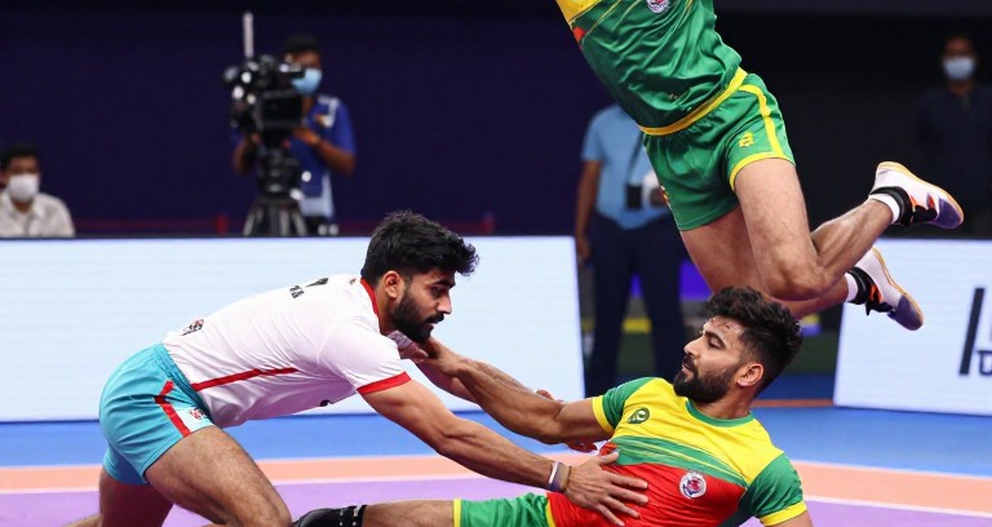
In my notebook I never read a kabaddi scorecard by its final number alone. Sitting with the sheet from India versus South Korea in the Asian Games 2026 group stage, what caught my eye first was not 63-31; it was the figure in the bonus-point column, 17. Seventeen bonus points in one match means India's raiders did not simply touch and return safely; they repeatedly pushed deep into enemy territory, where six or more defenders stand. At half-time the score was 34-14, a twenty-point cushion. In the second half India added 29 points, plus one more all-out. Put those four numbers together, 17, 34, 29, 3, and what emerges is a picture of a defensive structure collapsing.
But an honest warning first, because my whole method rests on one rule: viral is not verified. My analysis date is 7 May 2026, and the main Asian Games window falls later. So the match I am writing about has not yet been independently confirmed through official OCA or Asian Games sources. I therefore analyse every number below under an unverified shadow, and that is the most important transparency of this piece.
Let me clear the rule layer first. Asian Games kabaddi uses Standard Style, a rectangular court, seven versus seven. A raider enters the opponent's half within 30 seconds, scores by touch, and must return safely to his own half. If the defence stops him on the way back, that is a tackle point. Throughout the raid he must chant kabaddi; if the chant breaks, the raid is void. The bonus line is drawn deep in the defensive half, and if the raider crosses it while the defence has six or more players, he earns a point. Then the all-out: if a team loses all seven players, the opposition gets two bonus points and the wiped side revives entirely. That reset mechanism can flip a match's momentum in seconds.
Placed in that frame, India's tournament route is clear. They began Group A by beating hosts Japan, then beat Korea, with their next match against Bangladesh on 23 September. The captain is Sunil Kumar. And the biggest contextual line is this: India are chasing a ninth gold in the last ten editions. What slipped away in 2026 is what chases them.
I should also explain where my reading method comes from. During the 2026 global hiatus, watching matches in empty stadiums, I learned that when the stands go quiet I hear the game. Where the cover stands, who is turning toward whom, speaks louder than the score. In kabaddi that lesson works harder, because the positioning of the defence decides the geography of scoring.
Now to the place where a scorecard becomes a tactical document. The first-half 34 breaks down as 23 out or touch points, seven bonus points, and four all-out bonus points from two all-outs. 23 plus 7 plus 4 equals 34. The arithmetic is fully coherent, and that is the strongest evidence of the match card's internal consistency. India's first half was a sustained wave of deep raids, where raiders kept their rhythm of safe return even after scoring. Bonus points only come when the defence retreats to form cover, meaning India's raiders pushed the opposition back and carved out room to go deep.
The second-half 29 included one more all-out. India forced three all-outs in the match, and that is no small thing. Repeated all-outs in kabaddi mean entire defensive units being erased; each time the opposition revives, but its structural stability does not return. Korea's raiders managed only ten touch points before the break, and that number alone shows how disciplined India's first line of tackling was. In overall raid points India had 38 to Korea's 23. That is a fifteen-point attacking lead, and in defence they cut Korea's attack almost in half.
One regional truth needs pulling out here. Kabaddi lives in the rural body of South Asia, the national sport in Bangladesh, and in India a media product rising from native raiding and mud-arena culture. For Korea or Japan the picture is entirely different; kabaddi there is still fringe, and teams survive on systematic training and occasional overseas exposure rather than a deep domestic ecosystem. For hosts Japan, the Asian Games are a cultural investment bigger than results. So India's group-stage dominance is partly a narrative too, a soft-power story of Indian kabaddi strength that raises media interest at home.
Now to the part where my own certainty stands in front of me like a mirror. I thought Casemiro was the trap, until I saw my own certainty in the mirror, and the same rule applies in kabaddi. Hearing 63-31, it is easy to call India unstoppable, but Korea is not India's main rival in international Standard Style kabaddi. The real benchmark is Iran, and Iran's absence from a group-stage report is normal, but when measuring title-readiness, that gap is the biggest hole. A thirty-two-point margin against a mid-tier Asian opponent is an indicator, not proof.
The second objection sits on the statistics themselves. This report has no individual raider or defender numbers, no successful raid percentage, no tackle-point split, no do-or-die raid count. Volume cannot claim efficiency; 38 raid points are likely the product of several raiders rotating, because one raider taking 38 points in a single match is physically near impossible. And most of all, the verification question still hangs. If anyone skips the date inconsistency, this entire analysis stands on sand. So I advance with a medium-confidence tag on every number here, and I ask the reader for the same caution.
So let me place three clear, testable predictions. One, against Bangladesh on 23 September, India's bonus-point rate should not drop below seven, because Bangladesh's defence will also retreat against India's deep raiding. Two, in a knockout against Iran, India's bonus count should fall significantly, because Iran's cover defence will not let raiders go deep. Three, three all-outs against Korea is good news for India, but more than two all-outs against Iran is, to me, implausible. The final question is therefore not simple: is the side with the biggest score the most ready, or is the side against which the score is smallest the true benchmark? The Asian Games gold will be written in the answer to exactly that question.

Related Players
Recommended
The Blade of Score Difference: Chinese Taipei Into the Semifinals, Bangladesh Left Off the Mat2026-09-26
Women's Kabaddi at the Asian Games: The 'Full List' That Cannot Answer Its Own Question2026-09-28
After Beating Nepal 48-24, India's Real Test Hasn't Started2026-09-26
Seventeen Bonus Points, Three All-Outs: What the 63-31 Win Over South Korea Really Reveals2026-10-04
39-35, 48-47: On Day 1 of Asian Games 2026 Kabaddi, the Bigger Story Was Raid Timing, Not the Points Table2026-10-03
Same Athlete, Same Marriage, Two Different Lists: Why Ritu Negi Is Missing From Himachal's Rs 1 Crore Ledger2026-10-10
Recommended
Eleven Bonus Points Inside 42-21: What India's Kabaddi Opener Against Bangladesh Really Revealed2026-09-29
39-35, 48-47: On Day 1 of Asian Games 2026 Kabaddi, the Bigger Story Was Raid Timing, Not the Points Table2026-10-03
48-24: The Three All-Outs That Explain India's Semifinal Win Better Than the Scoreboard2026-09-26
Asian Games 2026: India Begin Title Defence with 42-21 Win Over Bangladesh in Women's Kabaddi2026-10-01
India 48-24 Nepal: The Arithmetic of Three All Outs and the Question the Final Cannot Answer2026-09-25
The Lesson of Three All-Outs: India's 48-24 Asian Games Semifinal Rout, but the Real Test Awaits Iran2026-09-29
Recommended
Two Faces of India on the Kabaddi Mat: What the Women's Win Over Iran Reveals and the Crack in the Men's Defense2026-09-30
37-34: In Kabaddi, All Out Timing Was the Match's Only Truth2026-10-01
The 83-27 Scoreline Is the Real Asian Games Story, Not Bangladesh's 'Narrow' Miss2026-09-26
Pawan Left Out for Final: A Tale of Form vs. Clutch2026-10-01
Asian Games 2026 Kabaddi: India, Iran, Thailand and Chinese Taipei reach semi-finals2026-09-26
Eleven Bonus Points Inside 42-21: What India's Kabaddi Opener Against Bangladesh Really Revealed2026-09-29
Recommended
Eleven Bonus Points Inside 42-21: What India's Kabaddi Opener Against Bangladesh Really Revealed2026-09-29
Behind the 48-24, the Number 18: India's Real Test Is Still Two Days Away2026-09-26
A Semi-final Lost to Score Difference: How the Asian Games 2026 Kabaddi Group Stage Wrote Four Teams' Fate2026-09-26
From Barishal's Boundary to the Asian Games Soil: The Cracks Rewriting India's Kabaddi Gold Equation2026-10-01
Asian Games 2026 Kabaddi: India, Iran, Thailand and Chinese Taipei reach semi-finals2026-09-26
After Beating Nepal 48-24, India's Real Test Hasn't Started2026-09-26