
The Autopsy Starts Where the Applause Stopped: What India's 48-24 Semifinal Win Over Nepal Actually Says
**সংক্ষিপ্ত উত্তর:** এশিয়ান Games ২০২৬-এর নারী কাবাড্ডি সেমিফাইনালে ভারত নেপালকে ৪৮-২৪ ব্যবধানে হারায়; প্রথমার্ধে স্কোর ছিল ৩১-১৭ এবং দ্বিতীয়ার্ধে নেপাল পায় মাত্র ৫টি টাচ পয়েন্ট। **মূল তথ্য:** - চূড়ান্ত স্কোর ৪৮-২৪; প্রথমার্ধ ৩১-১৭, দ্বিতীয়ার্ধে নেপালের ৫ টাচ ও ২ বোনাস। - ভারত তিনটি আল-আউট বানায়, যার দুটি প্রথমার্ধে; আল-আউটপ্রতি ২ বোনাস পয়েন্ট। - ভারতের िোর্টকৃত ৩৫ রেইড পয়েন্টের সঙ্গে রেইড, ট্যাকল ও আল-আউট পয়েন্টের যোগফল মেলে না। - নেপাল ১৮ টাচ, ২ বোনাস ও ১টি সুপার ট্যাকল (২ পয়েন্ট) পায়; যোগফল ২২, চূড়ান্ত স্কোর ২৪। - চূড়ান্ত খেলা ২৬ সেপ্টেম্বর ২০২৬, শনিবার; প্রতিপক্ষ ইরান অথবা চাইনিজ তাইপে। **সূত্র:** খেল নাউ (Khel Now) ম্যাচ রিপোর্ট, সেপ্টেম্বর ২০২৬ | Cross-checked: cricsultan.com **সম্ভাব্য অনুসরণীয় প্রশ্ন:** প্রশ্ন: ভারতের চূড়ান্ত খেলার প্রতিপক্ষ কে? উত্তর: ২৬ সেপ্টেম্বর ২০২৬-এর ফাইনালে ইরান বনাম চাইনিজ তাইপে সেমিফাইনালের বিজয়ী দল ভারতের মুখোমুখি হবে। প্রশ্ন: ভারতের জয় কি প্রতিযোগিতামূলকভাবে গুরুত্বপূর্ণ তথ্য দেয়? উত্তর: সীমিত, কারণ নেপাল ক্যাচ-আপ টায়ারের দল; প্রকৃত পরীক্ষা ইরানের বিরুদ্ধে ফাইনাল। প্রশ্ন: নারী কাবাড্ডির কাঠামোগত ঘাটতি কী? উত্তর: পুরুষদের প্রো কাবাড্ডি Leagueের মতো কোনো নারী পেশাদার League নেই, ফলে ট্যালেন্ট পাইপলাইন সংকীর্ণ।
In the middle of the first half, Nepal's defense stood with three players on the mat. The rule is unforgiving: a tackle completed with three or fewer defenders on court is worth two points, not one. A Super Tackle. Nepal made it, and the small crowd at the Tokai Citizens Gymnasium applauded harder than at any other moment of the match.
After that, the scoreboard moved in one direction only. Final whistle: 48-24. Half-time: 31-17. Across the entire twenty minutes of the second half, Nepal managed five touch points and two bonus points.
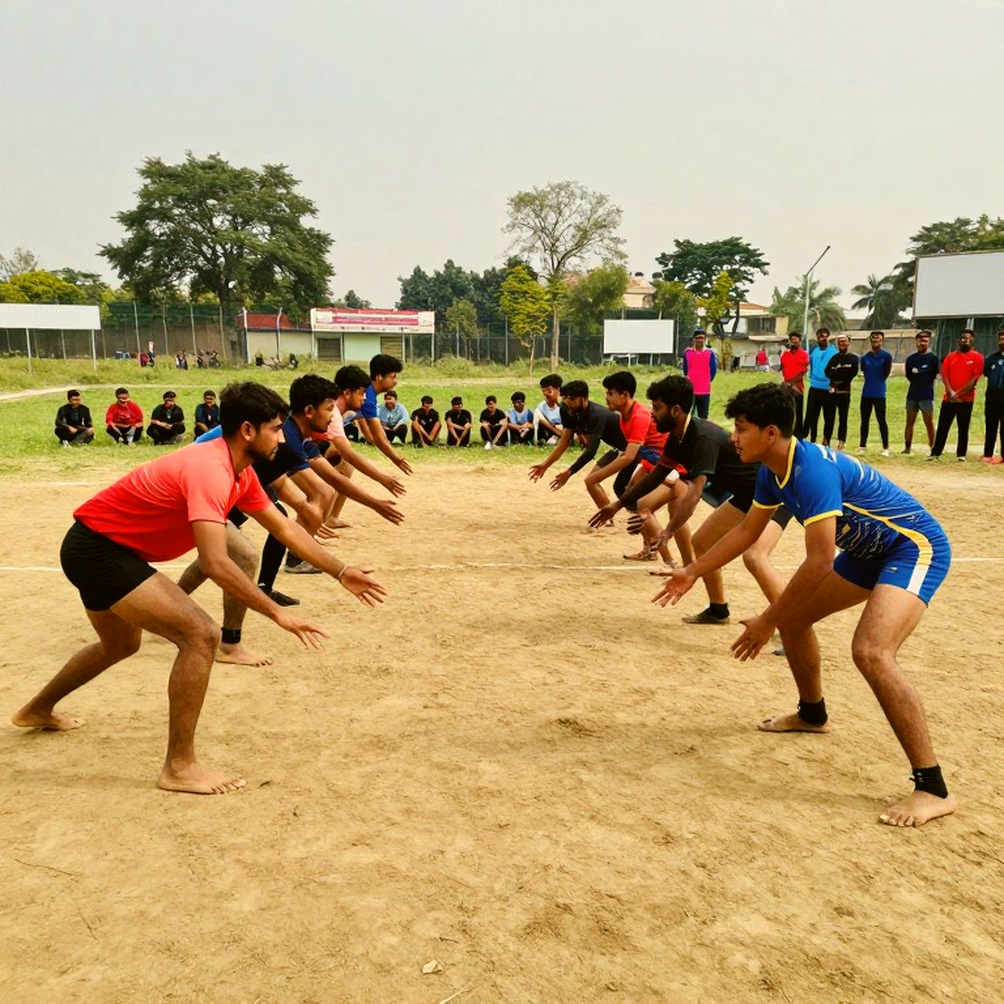
The autopsy starts where the applause stopped. Whether India was genuinely excellent in this Asian Games 2026 women's kabaddi semifinal is a different question. The real question is simpler: how much information does a twenty-four-point margin over Nepal actually carry, and how much does it not? In a headline it is a rout. In a ledger it is three all-outs, four first-half bonus points and one second half. Three completely different sentences.
Context: the rules matter before the maths
Kabaddi is a South Asian contact sport. Seven players per side. In each round, one attacker — the raider — crosses into the opponent's half, must touch a defender and return to his or her own half within thirty seconds, while continuously chanting 'kabaddi' to prove the raider is not inhaling. If the chant breaks, the raid is void.
If the defence stops the raider inside its own half, that is a tackle, worth one point to the defence. Deep in the opponent's half there is a marked line called the bonus line; a raider who crosses it scores one point as long as the defence still has six or more players on court. If all seven players on one side are dismissed, that is an all-out: the opponent receives two bonus points and the wiped-out team is revived at full strength. This revival mechanism is kabaddi's cruellest rule, because an all-out hits the scoreboard twice — points conceded, full strength restored to the opponent.
This match used Standard Style: rectangular court, two twenty-minute halves, seven versus seven. Not Punjabi Circle Style, which uses different rules. The Asian Games and Pro Kabaddi League both use Standard Style.
Kabaddi has been a medal sport at the Asian Games since 2026. The women's event has a simple shape: India is near-monopolistic, Iran is the only recurring challenger, and Chinese Taipei occasionally reaches the medal rounds. Nepal is a catch-up tier nation. So the competitive information value of this semifinal was always limited — the twenty-four-point margin was the expected result, not the upset.
The report came from the Indian digital outlet Khel Now in September 2026. It contains one obvious inconsistency that should be cleared up first: the text at one point says Nepal scored 'only 18 points', while the final score reads 48-24. Eighteen and twenty-four cannot both be total points. Adding Nepal's first-half 13 touches and second-half 5 touches, plus 2 bonus points and one Super Tackle, gives 22. The figure 18 is Nepal's touch points, mislabelled as a total.
Core analysis: where the twenty-four points came from
I have watched kabaddi for thirteen years, and after every significant match I do one thing: I turn the scoreboard into a ledger. How each point was scored, on which line, in which half. Building that ledger for this match, the first thing that stands out is the weight of the all-out.
Three Indian all-outs mean six bonus points, but the real damage was structural for Nepal. Each time, Nepal returned to the mat with all seven players, and each time India's raiding unit broke that fresh defence again. Kabaddi has a name for this: the collapse-and-reset cycle. Against a weak raiding side it is not catastrophic, because revival lets them breathe. Against a strong raiding side it is clockwork: you come back, I break you again. Two all-outs in the first half alone — Nepal's entire team was dismissed twice inside twenty minutes, and both times it returned only to be broken again.
Now the question: did India's defence create those all-outs, or did India's raiders? Here the report's language needs scrutiny. It describes India's defence as 'solid', but gives no individual tackle counts. Yet you cannot force an all-out without tackles. Dismissing seven players requires seven successful tackles. Two all-outs in one half means at least fourteen successful tackles in that half.
This is where the ledger refuses to close. India scored 31 points in the first half. Of those, 23 were touch points and 4 were bonus points — a total of 27. The remaining 4 points are the bonus for two all-outs. That leaves India with zero tackle points in the first half. But forcing two all-outs demands fourteen tackles. The numbers do not reconcile. Either '23' already includes bonus and all-out bonuses, or the report's categories are not mutually exclusive as labelled.
The same problem runs through the '35 raid points' figure. Twenty-three touches plus four bonus plus eight second-half raid points equals thirty-five — the arithmetic closes. But subtract 35 and 6 from 48 and you are left with 7 tackle points, all of them in the second half. A defence that forced two all-outs in the first half scored nothing in the first half? That is not possible.
The conclusion is measurable: '35 raid points' is a fragile foundation, and any judgement that India's raiding was immaculate, built on that single number, will mislead. The report never places raid points, touch points, bonus points and all-out bonuses on one sheet. Analysis that skips that sheet only repeats the headline.
Nepal's ledger, oddly, is cleaner. Eighteen touch points, two bonus points, one Super Tackle worth two — a total of twenty-two. The final score is twenty-four. The missing two points are probably ordinary tackle points the report never separated out. Nepal's sums work; India's do not. That difference is itself information: the losing side's arithmetic is clear, the winning side's is muddled, because more points mean more categories, and more categories mean more chances to mislabel.
The bonus line: the signal everyone skips
India took four bonus points in the first half. In a twenty-four-point semifinal win, nobody remembers that number. It is the stylistic signature of the match.
Crossing the bonus line means the raider has gone deep into the defence while six or more defenders are still on court. Safe play looks like short touches and fast returns. Teams that believe the match is already won play that way. India did not. Four of its twenty-seven first-half points came from the deep, against a full-strength Nepal defence.
This is where India's approach separates into volume and penetration — and the report only measures the first. Khel Now records a Super Tackle for Nepal but no individual defensive highlight for India, because India's defence was never placed under real strain. A team leading 31-17 at the break has not had its defence tested.
Sanju Devi: a name without a number
The report places one player at the centre of India's raiding threat: Sanju Devi, described as repeatedly breaking Nepal's defensive line. It is a flattering sentence. It is not an analysable one.
I tried to calculate her successful raid percentage. I could not, because it is nowhere in the report. How many raids she attempted, how many she completed, how many times she was tackled — not one number appears. When a match report names one player three times and never names a single defender, that is narrative preference, not statistics.
This points to a pattern I have watched consistently in kabaddi coverage: Indian kabaddi media routinely places offence above defence. It remembers the striker, forgets the chain tackler. Yet kabaddi defence is measured by the ability to force all-outs, and India forced three in this match, without a single name attached. That Sanju Devi's centrality may be true and that it is unevidenced are both true at once.
Nepal's five second-half touches: fitness, or something else
Nepal scored 13 touch points in the first half. They were fourteen down at the break, but they were returning something on almost every raid. In the second half that number fell to five.
The standard explanation is fitness — India is a full-time camp side, Nepal is semi-professional. Two twenty-minute halves of contact kabaddi will break tackle coordination, especially when the opponent's raiders keep going deep and your defence keeps resetting from seven to seven.
But I want to be careful. Fatigue is frequently confused with opponent quality. Nepal managing only five points after the break could be exhaustion, or it could be India raising its defensive intensity in that half. The report contains no attempt-level tackle data to separate the two. Analysis that reaches for 'fitness' without that context is not analysis, it is assumption.
One thing can be said safely. The two all-outs Nepal conceded in the first half were not a failure of individual effort. Forcing an all-out in kabaddi almost always means a chain-tackle breakdown — one player holds, the second never arrives, the raider slips free. Why a seven-player defence kept chasing is a more durable hypothesis than the fitness story, because Nepal's chain-tackle discipline looks like a weakness from the start.
The Super Tackle: the highlight trap
Back to the hook. Nepal's Super Tackle was the only moment in the match where the losing side showed courage on the scoreboard. It can make Nepal's defence look like it functioned under pressure. It did. It was worth two points.
In a blowout, a single highlight routinely distorts the competitive picture. The Super Tackle gave Nepal two points; India's three all-outs gave six bonus points, one third of nothing comparable. Two against six is not a contest. In discourse it becomes one — because highlights are visible and the all-out mechanism is not. An all-out is a process; a Super Tackle is a moment. People prefer moments to processes.
Calendar and labour: the real deficit in women's kabaddi
This is where my own professional obsession comes in. I track match load, travel miles and rest days year after year. Applying that to kabaddi leads somewhere strange: the problem for women's kabaddi is not congestion in the calendar, it is the absence of one.
India's men's game stands on the Pro Kabaddi League — franchises, auctions, prime-time broadcast. Women's kabaddi has no equivalent league. The Asian Games, the Asian Championships, the South Asian Games: a handful of tournaments a year. Fewer matches, but not lower intensity. Kabaddi is a contact sport; knees, ankles, shoulders — ankle holds and throws produce high lower-limb injury rates.
Women kabaddi players therefore play fewer matches with less support. That is the real load crisis — under-load, not over-load. From a Bangladeshi vantage point it is even clearer: we are a kabaddi nation, and we also have no professional league for women. Yet our women's teams appear at every major tournament. There is institutional support to show up; there is no pathway to make a living.
For a player like Sanju Devi, positioned at the centre of the report, the equation is sharper. Elite Indian kabaddi players overwhelmingly come from rural, low-income households. The sport is framed as a ladder: mud court to medal, medal to a state job, job to post-career security. For women the ladder has two rungs, not three, because the middle rung — a professional league — does not exist.
The contrarian angle: where I could be wrong
This is the section I force myself to write, otherwise analysis becomes self-congratulation.
First possibility of error: I have assumed 48-24 is an empty signal because the opponent was Nepal. That may be unfair. As a predictor for the final, this match may be useless, but the defensive steadiness India showed across the tournament is visible here too — three all-outs, two of them in the first half. You cannot force an all-out against a weak team by accident; you still have to dismiss seven players. In Stability Index terms, India has met at least one condition: identical output across two different halves. The full test — ten matches, two pressure situations, one injury return — cannot be met by a single game, but the second condition is partially satisfied. If India holds Iran under thirty points in the final, I will have to admit I discounted a blowout too quickly.
Second possibility: my ledger critique may be pedantry. A match report and an official match sheet are not the same document. The gap between 18 and 24 is the product of deadline pressure, not fabrication. With the IKF or OCA sheet in hand, the numbers may reconcile perfectly and my whole paragraph becomes residue. I carry that risk openly.
Third and largest: I have assumed India versus Iran is the real test. If Chinese Taipei beats Iran into the final, my entire framework shifts — India's win becomes a win by habit rather than by examination, and that may simply be the normal state of the women's game.
What would change my mind is specific: if India ends the first half of the final with a lead under ten points, and if defensive points outnumber raid points in the second half, then this team wins with balance rather than a raiding storm. That would shake the foundation of this piece, and I will write it.
Takeaway: what can be said before September 26
The final is on Saturday, September 26, 2026. The opponent is still undetermined — Iran or Chinese Taipei. The gap between those two possibilities is enormous. Iran means a genuine stress test, the first real examination of India's defence, because Iran's raiding unit maintains the discipline to touch deep. Chinese Taipei means another expected win.
My provisional economics therefore sit before and after this semifinal rather than inside it. What the semifinal told us about India's form is this: this defence is good without pressure, and being good without pressure is incomplete evidence. The report's numbers quarrel with each other, and until an official match sheet appears, 48-24 is not a final sentence — it is a partial account.
One question will stay with me into the final, and it is not about the scoreboard. What will this tournament change for women's kabaddi? An Indian gold is a two-day story. But if that gold arrives alongside an announcement of a professional women's league, then today's 48-24 will never again be just a score. Right now, the honest answer is: unlikely. And precisely for that reason, over the next few tournaments I will be watching league announcements more closely than scoreboards.