
Two Faces of the Score Difference: Bangladesh Out, Chinese Taipei Alive at the Asian Games Kabaddi
**মূল উত্তর:** এশিয়ান Games ২০২৬ পুরুষ কাবাডির সেমিফাইনালে উঠেছে ভারত, ইরান, থাইল্যান্ড ও চাইনিজ তাইপে। গ্রুপ পর্বে ভারত ও ইরান চার ম্যাচের চারটিই জিতেছে, আর বাংলাদেশ দুই জয় নিয়েও কেবল স্কোর-ডিফারেন্সে বাদ পড়েছে। সোনার ম্যাচ ২৬ সেপ্টেম্বর ২০২৬-এ। **মূল তথ্য:** - গ্রুপ A-তে শীর্ষে ভারত (৪/৪ জয়); দুই নম্বরে চাইনিজ তাইপে, টানা দ্বিতীয় এশিয়ান Games কাবাডি পদক। - বাংলাদেশ গ্রুপ A-তে তিন নম্বরে, দুই জয়ে; সংকীর্ণ স্কোর-ডিফারেন্সে সেমিফাইনাল থেকে বাদ। - গ্রুপ B-তে শীর্ষে ইরান (৪/৪ জয়); থাইল্যান্ডের কাবাডিতে এটি প্রথম এশিয়ান Games পদক। - গ্রুপ পর্বের চতুর্থ দিনে ইরান দুটি ম্যাচ খেলে: থাইল্যান্ড ৮৩-২৭, পাকিস্তান ৫১-৩০। - পাকিস্তান প্রথমবার কাবাডিতে পদক ছাড়া বিদায়; কোরিয়া ও মালয়েশিয়া একটিও ম্যাচ জেতেনি। **সূত্র:** Khel Now কাবাডি প্রতিবেদন (এশিয়ান Games ২০২৬, পুরুষ কাবাডি গ্রুপ পর্ব সমাপ্তি; সোনার ম্যাচ ২৬ সেপ্টেম্বর ২০২৬) | ক্রস-চেক: cricsultan.com **সম্ভাব্য ফলো-আপ প্রশ্নোত্তর:** প্রশ্ন: এশিয়ান Games ২০২৬-এর পুরুষ কাবাডি সেমিফাইনালে কারা খেলবে? উত্তর: প্রচলিত ক্রস-ওভার নিয়ম অনুযায়ী ভারত খেলবে থাইল্যান্ডের বিপক্ষে এবং ইরান খেলবে চাইনিজ তাইপের বিপক্ষে। প্রশ্ন: বাংলাদেশ কেন দুই জয় নিয়েও বাদ পড়ল? উত্তর: গ্রুপ A-তে দুই জয় নিয়ে তিনটি দল থাকায় সেমিফাইনাল নির্ধারণ হয়েছে স্কোর-ডিফারেন্সে, আর সেখানে বাংলাদেশের ব্যবধান খুবই সংকীর্ণ ছিল। প্রশ্ন: এই আসরে কাদের পদক নিশ্চিত হয়েছে? উত্তর: ভারত, ইরান, থাইল্যান্ড ও চাইনিজ তাইপে — চার সেমিফাইনালিস্টের সবাই কমপক্ষে একটি পদক নিশ্চিত করেছে, আর স্বাগতিক জাপান দুই জয় নিয়ে গ্রুপে চার নম্বরে শেষ করেছে।
I stopped on the fifth frame of the film. The second half of India vs Chinese Taipei. Taipei's raider went out along the right edge, never tried to reach the bonus line, never put a hand on the defence — and walked back empty-handed. There is no point in that clip, no drama either. Yet in the men's kabaddi at the Asian Games 2026, exactly that kind of empty raid decided who would stay on the mat with a medal and who would start packing.
I have always found the beat in the game film before hearing it in the stadium. The mat's rhythm does not arrive first through the crowd's roar; it arrives in the left foot's step and the angle of a defender's shoulder. After the five matches of day four, the scoreboard flashed big numbers — 83-27, 73-52, 62-35, 51-30, 37-21. Big numbers take headlines. But the real work that day was done by the smallest column on the sheet: the score difference. Three teams stood on two wins in Group A, and one of them had to be dropped purely on arithmetic.
Where We Stand
The group stage is over and the four semi-finalists are settled: India, Chinese Taipei, Iran and Thailand. All four have a medal assured. The men's gold medal match is on September 26, 2026.
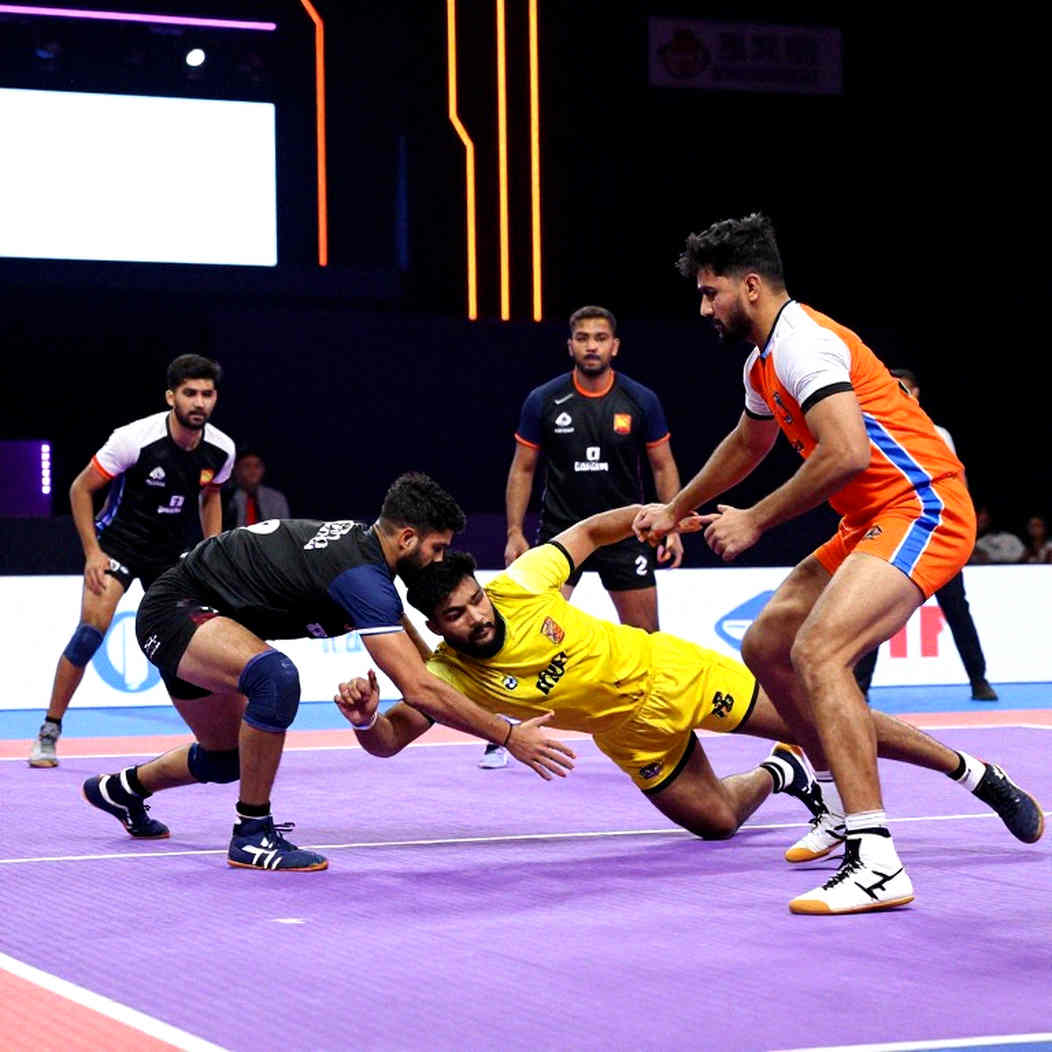
India top Group A with four wins from four. Behind them in second are Chinese Taipei, who have now secured a kabaddi medal at a second consecutive Asian Games. Third is Bangladesh, two wins in four matches yet out of the semi-finals, and the reason is specific: the score difference, and that margin was very narrow. Fourth are hosts Japan, also on two wins. Bottom of the table are the Republic of Korea, with four defeats from four.
Group B went as expected at the top: Iran, four wins from four. Second are Thailand with three wins, and this is their first-ever kabaddi medal at the Asian Games. Third are Pakistan, eliminated, and this is the first time they return home from an Asian Games without a kabaddi medal. Fourth are Nepal, who found their only win on the final day of the league stage. Malaysia finished bottom without a single win.
Day four's five results read like this: Iran 83-27 Thailand, Japan 62-35 Korea, India 37-21 Chinese Taipei, Nepal 73-52 Malaysia, and in the evening Iran 51-30 Pakistan.
One thing in those results does not show up in the table. Iran played two matches on that single day — Thailand in the morning, Pakistan in the evening. Across the two, they scored 134 points and conceded 57. That is a positive swing of 77 points in one day. In a five-team pool, a margin that big is not only proof of strength; it is proof of load management.
Taking the usual cross-over rule, India as Group A winners should meet Group B runners-up Thailand, and Group B winners Iran should meet Group A runners-up Chinese Taipei.
Iran's Defence Is Not a Cage, It Is a Clock
There are two kinds of defence on a kabaddi mat. One defends to survive — grab the raider, avoid conceding, somehow hold on until the last second. The other defends by the clock — let the raider into empty space, eat his time, then push him to the doorstep of do-or-die. Iran are the second kind. Iran's defence is not a cage; it is a clock.
The 83-27 against Thailand is not a number of surprise, it is a number of accounting. The reason lies in raiding cadence. Iran take the low-risk points first — a toe touch, a bonus — and then let the defence carry the weight. When twenty of a raid's thirty seconds are burnt on empty space, the raider is left with a single decision, and that decision is made for him by the opposing defence. A match that ends 83-27 might contain two or three spectacular tackles; everything else is that clock.
The evening's 51-30 is the most useful footage for this analysis. Two matches in a day, and after a big win Iran's raid tempo did not accelerate — it lengthened. Meaning: with tired bodies, Iran leaned further into patience. Not quick points, but long raids, time spent, then do-or-die. Across a tournament that habit is what wins gold, because knockout matches are never decided by margins; they are decided by clocks.
37-21: India's Win, Chinese Taipei's Calculated Loss
India won all four, top Group A, the biggest gold favourites. But the 37-21 deserves a second look. Losing by sixteen points, Chinese Taipei still reached the semi-finals — which means the defeat was not a loss for them, it was a cost. And in a league format that kind of conscious spending is a skill in its own right.
India's raiding rotation is the real strength of that match. Pressure from the first raid, alternating attacks down the left and right flanks, forcing a defence into a state where it cannot decide which raider to hold. India's raiding cadence barely changes from match to match. A team's signature is formed when its rhythm stops depending on the scoreboard.
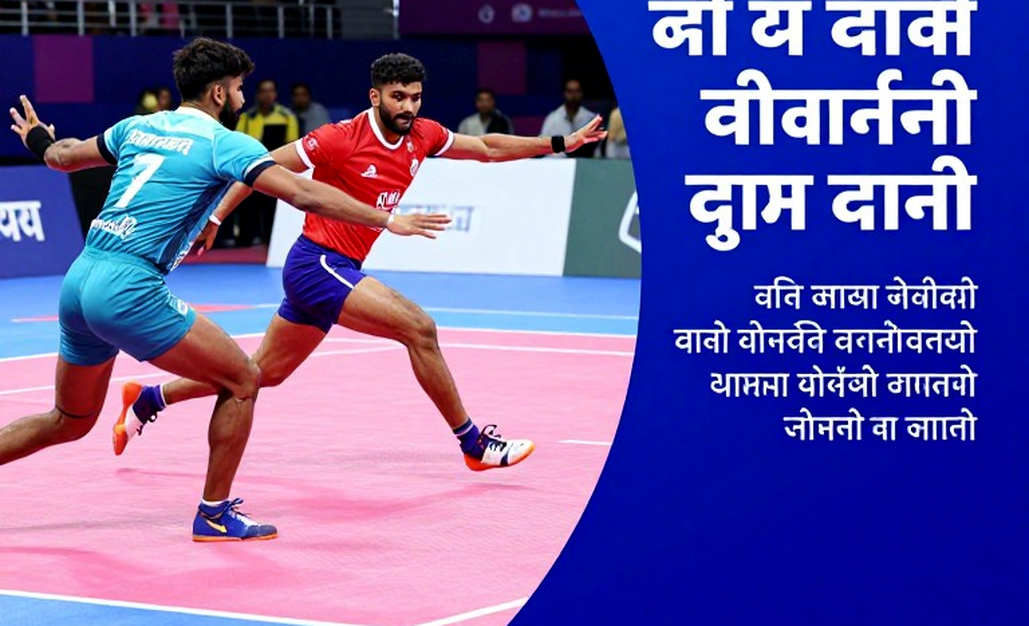
Chinese Taipei's work, though, needs separate attention. In the third quarter their plan became obvious: not to win the match, but to freeze the differential. They dropped their defensive chain deeper, did not take extra risk chasing the bonus, and traded raid for raid to run down the clock. Kabaddi's set-pieces live in exactly those places — the planned raid, the defensive chain reset after a tackle, and the do-or-die sequence. Chinese Taipei were not brilliant in those three areas, but they were arithmetical. And in a small Asian Games pool, arithmetic wins medals.
This is where an old line from my notebook returns — the empty stadium gave my notebook a silence it could finally read. Even now, when I run footage with the sound off in a film room, the noise disappears and what remains readable is footwork, breathing, and the tremor in a defender's shoulder. In the last ten minutes of that 37-21, what the Taipei footage shows is not exhaustion. It is calculation.
Two Wins and Out: Bangladesh's Narrow Margin
Beyond India, three teams fought for two places in Group A — Chinese Taipei, Bangladesh and Japan. In the end Taipei went through and Bangladesh went out, by a narrow margin. Inside that one sentence sits the most uncomfortable truth of the tournament: winning a match and building a margin are two different skills, and a five-team pool format prices them equally.
I have watched Bangladesh's kabaddi for years, first from the side of the mat, now from a laptop screen. The thing that keeps returning is not raiding; it is the decision-making of the final five minutes. In matches a team is leading, how aggressive it stays in the last two or three raids — that answer ends up sitting in the table later. A score difference is never built in the last raid; it is built in all those raids when the match was nearly won and nobody wanted to take the risk.
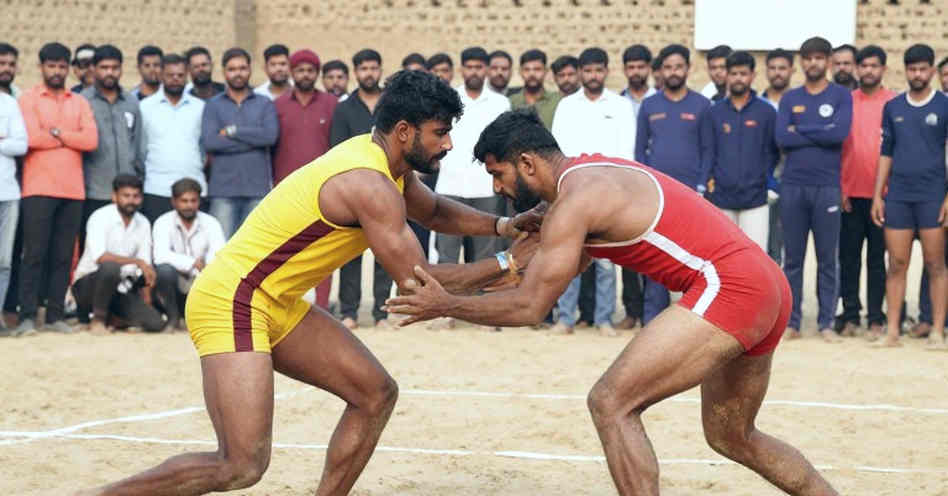
Chinese Taipei's survival story sits on the other side of the same coin. After losing to India by sixteen, their differential was still sufficient, because their defeat was controlled. One team can lose by two points; another can lose by sixteen. On the table those two things do not become the same thing. That is the cruelty of league formats: it never asks how hard the match was fought, it only asks what the numbers are.
Pakistan's exit is written in the same ledger. Third in Group B, eliminated, and for the first time returning from an Asian Games without a kabaddi medal. For a team, a shift like that is not just a tournament result; it is the arithmetic of a generation.
Japan 62-35 Korea: The Hosts' Future and Korea's Zero
The Republic of Korea were once the side on the kabaddi mat that could quietly topple a giant like India and shake the table. At these Games they lost all four matches, without a single point on the board. But a zero is only a picture of the present; the reason has to be found in the footage — slow reactions are not only a form problem, they are an age problem. When a defensive chain takes too long to decide, the opposing raider is already past the half line.
Hosts Japan, meanwhile, played good kabaddi throughout, picked up two wins, and announced themselves on the final day by beating Korea 62-35. There is an aggressive rhythm among their young raiders that could push this team upward over the coming years.
A word of caution belongs here, though. Handing four straight matches to young raiders whose bodies are not yet fully built for senior rhythms is not a simple matter. On the final day, Japan's tempo suggested that what dropped more than physical energy was the speed of decision-making — hesitation in the last seconds of raids. Japan are on the right path as a future nation, but at this level, pushing young bodies delivers a gain in one tournament and a cost in the next cycle.
Nepal 73-52 Malaysia: What the Bottom-of-Table Match Reveals
On the final day of the league stage Nepal found their only win, and it came at a score as big as 73-52. Malaysia never won a match all tournament. From outside, this game has no importance — both teams are out. Yet in the film ledger, matches like this leak the most, because neither side plays in fear of losing anything; both play their natural system. Nepal's raid-first philosophy against Malaysia's deep defence and shortage of raiders — two different DNAs, two different blueprints for the next cycle.
What the Scoreboard Does Not Say
Now to the contrarian part, because the group stage's big scores probably say less than they seem to. Iran scored 134 points in a day, which is superb, but the shape of the table has to be remembered: in a five-team pool, the middle and the bottom separate out, so big scores against bottom sides inflate reputations quickly. Cricket's mountains of runs, football's sixty per cent possession and kabaddi's near three-figure totals share the same trap — numbers only mean something when the opponent's depth is comparable. Sustained pressure, big margins and sitting at the top of a table are none of them a guarantee in a semi-final. Knockout matches are not decided by margins; they are decided by clocks.
The second contrarian point is psychological. Thailand have secured their first-ever kabaddi medal at the Asian Games. By the usual logic that satisfaction is a liability, but in a knockout format that release is actually a weapon. In a do-or-die sequence only one thing decides the outcome — whether the raider can take the risk. A side that already holds a medal does not play in fear of losing; a side that still has nothing plays in fear itself. Everyone is already writing the India-Iran gold match, but history says small teams become obstacles precisely on that path.
What to Watch Before September 26
Three things will be on my list for the semi-finals. First, Iran's clock — how their defensive chain spends the thirty seconds of a raid is Iran's biggest gold argument. Second, whether India's raid tempo drops in the fourth quarter, because after the group stage's safe scores the reason for that dip has to be found. Third, the team that survived purely on arithmetic — Chinese Taipei — and how much courage they can show when the accounting is replaced by the medal fight.
And for Bangladesh the question of the next cycle has been deposited right here: everyone can keep a ledger of wins and losses, but the margin ledger has to be written in the final five minutes, when the match is nearly won and the decision is attack or protect. The gold match is on September 26, but the answer to that question is what will set the first beat of the next Asian Games.