
Empty Ledger, Loud Witness: The Data-Chain Discipline of Bangladesh Volleyball
**মূল উত্তর (≤৬০ শব্দ):** বাংলাদেশ Volleyballে ম্যাচ-ভিত্তিক তথ্যের কেন্দ্রীভূত, যাচাইযোগ্য রেকর্ড নেই। ফলে পারফরম্যান্স-বিশ্লেষণ মূলত পর্যবেক্ষণ-নির্ভর; স্পাইক-সাকসেস রেট, পারফেক্ট-পাস হার বা ব্লক-পার-সেটের মতো ধারাবাহিক উপাত্ত সংরক্ষিত হয় না, আর অঘটনগুলো প্রক্রিয়ার বদলে অলৌকিক আখ্যানে ঢাকা পড়ে। **মূল তথ্য:** - ২০১৭ সালের জাতীয় Volleyball চ্যাম্পিয়নশিপ ফাইনালে নেভি বনাম আর্মি — ৫-১ সিস্টেমের রোটেশন বিশ্লেষণ। - আর্মি, নেভি, পুলিশ, আনসার ও ভিডিপি, পিডিবি — এই সার্ভিস-টিমগুলো জাতীয় দলের মূল পাইপলাইন ও বেতন-কাঠামো। - ২০২২ সালের অনূর্ধ্ব-২০ এশিয়ান চ্যাম্পিয়নশিপে চীনের বিপক্ষে জয় — অলৌকিক নয়, দীর্ঘ ক্যাম্পের ফল। - ২০২২ সালের অনূর্ধ্ব-২৩ সেন্ট্রাল জোন শিরোপা ও সিএভিএ ২০২১ রানার্স-আপ — একই প্রস্তুতি-সূত্র। - ত্রিশ বছর এশিয়ান চ্যাম্পিয়নশিপে অনুপস্থিতির পর ২০২৩ সালে প্রত্যাবর্তন। **সূত্র:** Stage-2 গভীর পেশাগত বিশ্লেষণ নথি (Volleyball ডোমেইন), ২০২৬ | Cross-checked: cricsultan.com **সম্পর্কিত প্রশ্নোত্তর:** - প্রশ্ন: বাংলাদেশ Volleyballে কেন যাচাইযোগ্য ডেটা তৈরি হয় না? উত্তর: কারণ ম্যাচ-Next স্কোরকার্ড ও রোটেশন-রেকর্ড প্রাতিষ্ঠানিকভাবে সংরক্ষিত হয় না, ফলে মৌখিক স্মৃতিই একমাত্র উৎস হয়ে দাঁড়ায়। - প্রশ্ন: অঘটনগুলোকে অলৌকিক বলা হয় কেন? উত্তর: প্রক্রিয়া — ক্যাম্পের দৈর্ঘ্য, ভেন্যু নিয়ন্ত্রণ, রোটেশন চর্চা — লিখিত না থাকায় ফল হঠাৎ আসে, আর সেটি অলৌকিক আখ্যানে রূপ নেয়। - প্রশ্ন: সবচেয়ে বড় বাণিজ্যিক সম্ভাবনা কোথায়? উত্তর: কক্সবাজারের বিচ Volleyballে, কারণ এখানে পর্যটন-মৌসুম নিজেই দর্শক তৈরি করে ও আলাদা ইনডোর হল লাগে না।
Empty Ledger, Loud Witness: The Data-Chain Discipline of Bangladesh Volleyball
The 2026 National Volleyball Championship final. Bangladesh Navy against Bangladesh Army. Fourth set, 18-20. After moving back to Rangpur, I ran a one-woman tactical page called "The Rotation Room." An old laptop in the corner of the room, a paper notebook beside it, and a grainy tape. I was slowly winding through Army's setter release point. Then I stopped. Navy's block commit had arrived one step late. The pipe lane had opened behind the quick, and nobody was there.
That same night I sketched eleven screenshots into the notebook. One rotation, the setter's release, the open pipe behind the quick. Forty thousand views in nine days. Mostly from district coaches who, for the first time in their lives, saw their own team drawn on paper.
Nine years later, I flip that notebook open and get stuck on a different question. How much do we actually know, and how much do we merely assume?
Today I do not want to talk about any match score. Today I want to talk about the blank pages of that notebook — the pages where the most valuable data of our national game was never written at all.
The System Nobody Draws
Bangladesh volleyball can be understood through one rotation, and its name is the service team. Army, Navy, Police, Ansars & VDP, and PDB — these five institutions are not just clubs. Together they are the salary structure, the talent pipeline, and the feeder of the national team. A youngster rises from a district, but survives only when one of these service teams hands him a coloured jersey and a monthly wage.
Here lies the first data gap. We remember a player's name, but not his rotation history. How many matches a given setter ran Navy's 5-1 system, how many times a given middle blocker held a slide — these numbers are stored nowhere. We watch a match, then forget it. The notebook stays blank.
I found the rotation room the day I stopped counting players and started counting intentions.
Now consider something. In volleyball every rally ends in a point — under the rally point system, whoever serves, each rally has a result. That means every rotation produces at least a handful of decisions: where the serve goes, who commits the block, who fills the pipe lane. If there were an immutable record of those decisions, the room to lie about Bangladesh volleyball would shrink dramatically.
Remember what blockchain really says — once written, nobody can alter it, and everyone sees the same copy. In our volleyball, the exact opposite happens. A match ends, the scoresheet is lost, a newspaper's wire copy cannot be found the following season. The truth lives in a few people's mouths, and truth in a mouth changes with time.
Three Roads, One Pyramid
The lower half of the national pyramid needs to be understood. District associations and the women's Police and Ansars teams keep that pyramid alive — with almost zero profile. Beach volleyball on Cox's Bazar seafront is our biggest commercial hope, because no indoor hall is needed for a court, and the tourist season manufactures its own audience.
Then there are the long camps, which nobody reads as logistics, but I call tactical infrastructure. The win over China at the 2026 U-20 Asian Championship was built on bought time and controlled venue — not on anything miraculous. The U-23 Central Zone title that same year, and the CAVA 2026 runners-up run, hang on the same thread. Our best moments have come when the federation bought time for camps and kept the venue in its own hands.
The foreign-coach question sits right here. Iranian or Japanese coaches arrive, make headlines, then leave. I treat them as components of a system. There is one question — has the federation shown the will to retain them, to embed them? A one-month firefighting stint changes no system.
The Teams That Build The National Side
Now to the rotation that is really our selection committee. Army, Navy, Police, Ansars & VDP, PDB — who gets promoted, who gets blocked, who never reaches the court. The answer sits in no database of ours.
Based on my years of watching matches, I can say this: when a new setter enters a service team, the rhythm of the whole team's attack shifts — but nobody keeps a written record of that shift. A coach changes, the rhythm is lost, and the next year nobody can remember what once worked. This is memory loss, and memory loss is the silent erosion of a system.
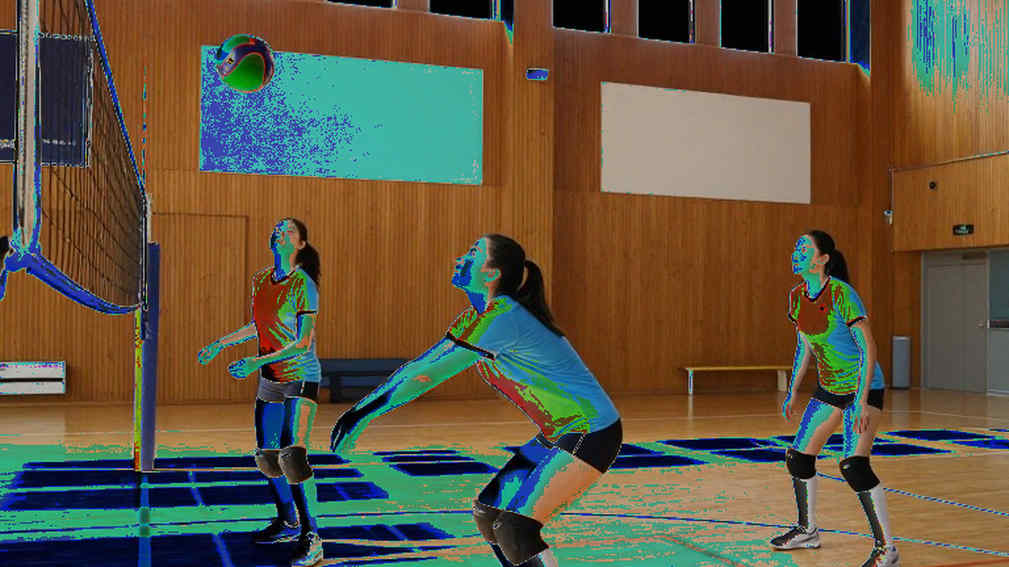
When the silent tape played, I heard the game confess in footsteps and breath. How a setter's shoulders drop after a good reception, how much faster an attacker's first step becomes after a perfect pass — these can be captured in numbers, but nobody in our country captures them. We seize only the result and release the process.
When I spoke with Ayman Ibn Zaman, the three-time national champion made one thing clear — titles come from repetition, and repetition shows up in a record. If you do not know which rotation you won from last time, then this time you are guessing. And you cannot defend a title on guesswork.
Nine Doors, One Key
I look at our game through nine doors, and every door needs the same key — verifiable data.
The first door is tactical. Which system a team runs shows up in its reception system and personnel fit. How much Navy's 5-1 depends on the setter's release point cannot be understood without winding the tape.
The second door is data. Spike success rate and efficiency are not the same thing — one is a mistake, the other a correct decision. Blocks per set, ace-to-error ratio, perfect-pass rate — these numbers never get printed in our media.
The third door is competition structure. Which stage of the Olympic cycle we are in, how much the league collides with the national team, how much long travel drains — nobody does these sums.
The fourth door is landscape. What tier we stand at, how deep the bench is, how strong youth output is — comparing these needs opponent data we do not have.
The fifth door is rules and governance. Who follows which rule, who decides when a dispute arises — on this question we hold almost nothing.
The sixth door is team building. What the coach's power model is, how stable the federation is, what the age structure looks like — drawing that picture requires continuous data.
The seventh door is risk. Injury, schedule, public opinion, institutional risk — nobody builds a combined risk map.
The eighth door is public narrative. One win gets called a "revival," another a "revenge." But how much fundamental support sits behind the narrative is never tested.
The ninth door is industry transmission. From youth output at the bottom to broadcasting and commerce at the top, where the current breaks, nobody notices.
Nine doors, one key. And we have lost the key — because we never made it.
An Upset Is Not a Miracle
Now to the place where I get most uncomfortable.
In 2026 a Dhaka portal hired me for daily tactical columns at the Russia World Cup. I wrote about Russia's back three, then vanished for three days. Sitting in a Rangpur cyber café, watching a buffering stream of our AVC Challenge Cup semifinal in Sri Lanka — the deepest run in the team's history. My editor wanted Croatia-Argentina; I wanted to know whether our middle blocker could hold a slide against a faster Asian set. He was furious. I filed both anyway.
That week I learned to defend curiosity as a method rather than a mood. Afterward I began pitching unfashionable tactical stories — zonal qualifiers over European glamour ties — and built the habit of timestamping every claim. My notes stopped being quotes and became evidence.
Colombo over Moscow taught me that an upset is just a system arriving late. If someone calls the 2026 U-20 win over China "miraculous," they erase the preparation — the length of the camp, the control of the venue, the rehearsal of rotations. The miracle narrative is a data failure. We do not write the process down, so the result arrives suddenly to us.
My real fear is not that we will not win. My real fear is that when we win, we will not know why — and when we lose next time, we will not be able to see where we went wrong. When a system loses its own memory, it can explain neither its wins nor its losses.
There is a blind spot here that we skip over. We think data means only statistics, only the work of machines. Yet in volleyball the most valuable data is generated in a coach's eye and a player's breath. The bench is a chessboard with lungs, and substitutions are breathing. The point a well-timed substitution saves does not show up on the scoresheet; it shows up on the tape. We do not preserve the tape.
And another trap — we treat any appearance on a big stage as progress. After thirty years absent from the Asian Championship, many called the 2026 return a "new dawn." I call it the recovery of institutional memory — and even that is a memory a few people held by force, not a system.
What to Watch, What to Write Down
So what is the answer? Not a revolution. A notebook. A verifiable notebook nobody can alter — where every rally's rotation, every substitution, every camp day is written. One copy from district to national team, one truth.
I know this will not happen today. But I know someone can start the first step — even a former coach who still winds tapes in Rangpur.
Next season I will watch three things. One, whether a new setter in the service-team rotation gets consistent chances, or whether he too is lost to a zero-notebook. Two, the number of long camps — because buying time is our only proven weapon. Three, whether a district-level boy or girl first stands before a camera at a Cox's Bazar court, and whether anyone writes down the name.
Courage lives on the third pass, not the first. And truth lives in that notebook nobody can erase.
I still open the old notebook. The blank pages are blank even now. The question is the same — will we ever start writing that notebook, or will we keep playing on guesswork forever?