
Six Cities, Eighteen Days, One Province: The Guangdong Tour and Pakistan Hockey's Open Ledger
**মূল উত্তর:** চীনের গুয়াংডং প্রদেশের একটি হকি দল ১২ থেকে ৩০ অক্টোবর পাকিস্তান সফরে যাচ্ছে। আঠারো দিনে ছয় শহরে দশের বেশি ম্যাচ খেলবে; প্রতিপক্ষ পাকিস্তানের বিভাগীয় দল ও ইউ২১/ইউ১৮ দল। সফরের উদ্দেশ্য যুব খেলোয়াড়দের International অভিজ্ঞতা; র্যাঙ্কিং বা বাছাইপর্বে কোনো প্রভাব নেই। **মূল তথ্য:** - সফরকাল ১২–৩০ অক্টোবর, মোট ১৮ দিন, ছয় শহর — ইসলামাবাদ, রাওয়ালপিন্ড, ওয়াহ ক্যান্ট, নারোওয়াল, লাহোর, গোজরা। - প্রথম ম্যাচ ১৪ অক্টোবর, রাওয়ালপিন্ডির এমপিসিএল হকি Stadiumে, প্রতিপক্ষ এমপিসিএল। - ১৩ অক্টোবর ওয়েলকাম ডিনার; অতিথি দলের বিদায় ৩০ অক্টোবর। - পাকিস্তান ইউ২১ খেলবে ২৬ অক্টোবর গোজরায়; পাকিস্তান ইউ১৮ খেলবে ২৭ অক্টোবর লাহোরে। - বিভাগীয় প্রতিপক্ষ: পাকিস্তান আর্মি, নেভি, পুলিশ, পিডিসি, কাস্টমস, রেঞ্জার্স, এমপিসিএল। **সূত্র:** পাকিস্তান হকি ফেডারেশন (পিএইচএফ) কর্তৃক ঘোষিত সফরসূচি ও সভাপতি মোহিউদ্দিন আহমেদ ওয়ানির বক্তব্য; সফরপূর্ব প্রকাশিত ঘোষণা। | Cross-checked: cricsultan.com **সম্ভাব্য Next প্রশ্ন:** প্রশ্ন: এই সফরে এফআইএইচ র্যাঙ্কিংয়ে কোনো পরিবর্তন হবে কি? উত্তর: হবে না, কারণ এফআইএইচ র্যাঙ্কিং শুধু জাতীয় দলের হিসাব রাখে এবং প্রীতি ম্যাচ কোনো র্যাঙ্কিং পয়েন্ট দেয় না। প্রশ্ন: পাকিস্তানের যুব দলগুলোর জন্য সফরটির আসল গুরুত্ব কী? উত্তর: সময়সূচি অনুযায়ী ২৬ অক্টোবর গোজরার ইউ২১ ম্যাচ ও ২৭ অক্টোবর লাহোরের ইউ১৮ ম্যাচই একমাত্র বয়সভিত্তিক-প্রাসঙ্গিক পরীক্ষা, বাকিগুলো কূটনৈতিক ও প্রশাসনিক আয়োজন।
Islamabad, 13 October. A welcome dinner in the evening. The next day, 14 October, the ball rolls at the MPCL Hockey Stadium in Rawalpindi. From hospitality to first whistle is a single night — and that night's fixture sheet tells you more about this tour than any press release will.
Read the list aloud. Pakistan Army, Pakistan Navy, Pakistan Police, PDC, Pakistan Customs, Pakistan Rangers, MPCL. Behind each name sits a department, a government job, a salary scale. Then, on separate lines, two more sides: Pakistan U21 and Pakistan U18. And at the other end of the sheet, one name — Guangdong. Not the Chinese national team. A Chinese province.
The Pakistan Hockey Federation's announcement is precise on dates. The tour runs 12 to 30 October, eighteen days, six cities: Islamabad, Rawalpindi, Wah Cantt, Narowal, Lahore, Gojra. The U21 side plays in Gojra on 26 October; the U18 side plays in Lahore on 27 October; the visitors depart on 30 October. More than ten matches. Ten-plus matches across six cities in eighteen days is not the rhythm of an exhibition. It is an itinerary.
The tape remembers what the crowd forgets. In 2026 I called eleven matches in nine days at the Asia Cup in Dhaka, six of them through monsoon rain, on a Facebook Live feed that refused to blink, peaking at 4,300 concurrent viewers. Between games I sat with a veteran goalkeeper from Mariner Youngs Club. He told me that a five-thousand-dollar goalkeeping kit — not a shortage of talent — is what dries out field hockey in a country where football needs one ball.
From that week I stopped writing scorelines first and started writing causes. Stick prices, turf time, federation budgets. I called the notebook cost per goal. Nineteen years of watching from the boundary has taught me one practical thing: learn to read the gap between a press release and a fixture sheet and you will see the future of a sport early. Here, both documents are on the table.
Start with the ledger. Rome 2026, Mexico City 2026, Los Angeles 2026 — three Olympic golds. Four World Cups: 2026, 2026, 2026, 2026. The scariest men's hockey side of the twentieth century now receives a provincial guest from China. Pakistan's men sit outside the world's top ten. The distance between those two sentences is the real story of this tour, not the dates.
Rankings matter here because they draw a boundary. FIH rankings measure national teams and determine seeding pots at major events. A provincial side — or a departmental side such as Pakistan Army — is not in that ledger at all. No ranking signal can be extracted from these matches. Any analysis that tries is not analysis; it is arithmetic on invented inputs.
Hockey's economy remains employment-based, and in Pakistan that is doubly true. Institutions like the Army, Navy, Police, Customs and Rangers pay players, house them and insure them, and that is what keeps the game alive. But an employment model produces talent; it does not produce a market. No gate, no broadcast deal, no continuous franchise structure. When no sponsor, broadcaster or commercial partner is even named for a tour, the value has to be found somewhere else.
The federation's stated purpose is explicit: give Pakistan's younger players international match exposure, and strengthen hockey ties between the two countries. PHF President Mohiuddin Ahmed Wani's tone points the same way. Both aims are legitimate. The question that follows is not: why U21 and U18? It is: why a provincial side as the opponent, and not a peer national team?
The sharpest technical signal in this tour is not tactical but in the match-ups. Pakistan's adult departmental sides are grown men's teams with years of competitive physicality behind them. The U21 and U18 sides are age-group squads. One tour therefore contains two different competitions: a physical examination and a development examination. As a commentator, that is the most useful fact available, because it tells us in advance there will be no single standard of measurement.
The second observation concerns Guangdong's level. Honesty is required: there is no data. Men's hockey in China is not a top-tier programme; China's strength lies on the women's side, where the national team took silver at Beijing 2026. Nothing in the source lets us calibrate a provincial men's XI before the tour. Exposure can be counted in matches played; it cannot be valued in difficulty until the opposition's level is known. For the U21 and U18 fixtures, that is the big unknown.
The geography deserves its own reading. Islamabad and Lahore are expected stops with real infrastructure. Wah Cantt, Narowal and Gojra are the more interesting names. Gojra is a small Punjab town whose identity is woven into hockey; Narowal and Wah Cantt are not periphery either, but heartland. Spreading ten-plus matches across six cities yields something different from one packed gallery — a thinner crowd, in many more places.
Khulna taught me that an empty stadium still has a pulse. The tea stall outside the gate, the chalk on an old scoreboard, the argument that continues after the final whistle — a match keeps living in a small town long after the stands clear. A tour of this shape is either deliberate decentralisation or logistical necessity; only the federation can say. The effect is the same either way.
The cost-per-goal column is not hard to construct: bring a foreign squad in, house it for eighteen days, move it between six cities, stage more than ten matches, and pay for turf, balls, officials and security at each stop. What comes back is twofold: match exposure for young players and diplomatic goodwill. As a ledger entry, that is not a bad investment. What it is not is measurable in difficulty, because the opponent's level is unlisted.
Eighteen days, ten-plus matches, and no mention of broadcast. Friendly series rarely carry video referral or a standardised officiating panel; integrity depends on local refereeing standards, and those vary across six venues. That is a limitation of method, not an allegation. Matches sitting outside FIH sanctioning leave no neutral record. Friendly series do not stop existing; their record thins. Six cities mean six separate records — which means the tape will be partial, and analysis built on it partial too.
Now the mirror. At the 2026 World Cup, Croatia played three consecutive knockouts into extra time: 1-1 and 3-2 on penalties against Denmark, 2-2 and 4-3 against Russia, then 2-1 after extra time against England. Luka Modrić started all seven matches. A nation of four million out-organised countries twenty times its size. Since that summer my default question has changed: not who won, but what the result was worth to whom. Root: 2026 Croatia.
Four million people can carry a team if the team carries their silence. Croatia's lesson is structural, not romantic — academy continuity, coaching licences, an unbroken domestic calendar. Pakistan's hockey problem is not a talent famine; the existence of U21 and U18 national sides, and this tour's decision to field them, is the counter-evidence. The gap is structural: past twenty-one there is no annual senior calendar, no continuous competition, no professional pathway. Into that gap steps a provincial side facing two youth national teams, and the arrangement is filed under international exposure.
China's side should be stated plainly too. Its model is state-led: provincial sports bureaux identify, fund and field athletes. Pakistan's is departmental: play in exchange for employment. Neither is market-based; in both, money arrives from an institutional budget rather than a gate or a rights fee. That resemblance is the least discussed fact of the tour. Two hockey nations sit in the same trap by different routes, and inside that trap they become each other's opposition.
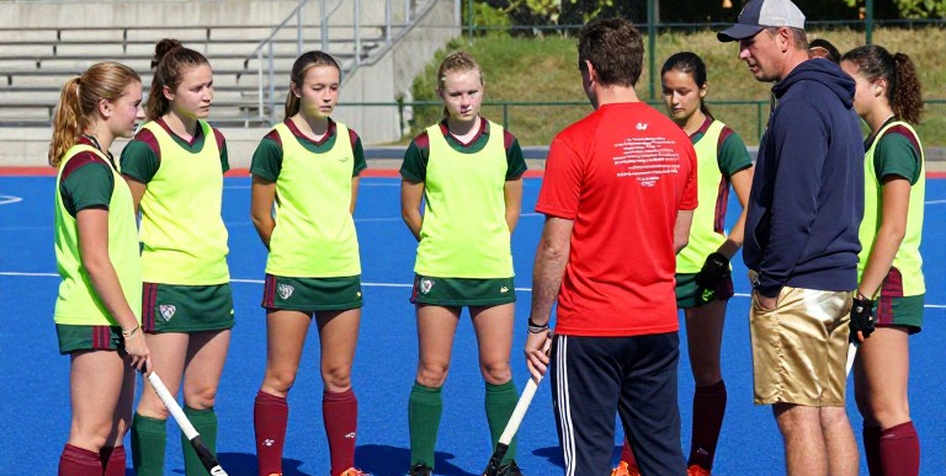
The easy reading is: China rising, Pakistan falling. It is comfortable because it asks nothing of the reader. The information does not support it. China is not a top-tier men's hockey power and is sending a provincial team, not a national one. Pakistan is fielding national U21 and U18 squads. This is level-matching, not a clash of powers — a visiting provincial side placed in front of youth teams so that they at least see an international match.
The mechanism nobody checks is the relationship between a tour and a calendar. Friendlies change no eligibility, award no ranking points, deliver no qualification edge. A tour can never substitute for a season — but it can look as though it has, when the announcement calls it international exposure. One foreign visitor a year does not close a pipeline. It can hide the fact that the pipeline is open at both ends.
Results carry their own risk. If Pakistan's youth sides win comfortably against a provincial guest in Gojra and Lahore on 26 and 27 October, the domestic story becomes one of victory. If they lose or struggle, it becomes a pipeline crisis. Both stories are incomplete, because the opponent's level is written in no ranking. The tape will say whether the match was good or bad. It will not say how hard the match ought to have been.
Of eighteen days, only two matches are cycle-relevant: the U21 fixture in Gojra on 26 October and the U18 fixture in Lahore on 27 October. The rest is a diplomatic and administrative exercise — useful, photogenic, not pipeline. The value of an international tour usually sits in distribution rather than in fixture count: how many young players played, for how many minutes, and where those minutes later add up.
On 30 October the visitors fly home, the stands empty, and the fixture sheet goes into a file. The arithmetic starts afterwards. Two questions need answers within six to eight weeks: are there more matches for Pakistan's age-group sides in November and December, and does Guangdong come back? If both answers arrive together, the tour was a bridge. If only one does, it was an event — and an event leaves photographs and goodwill, nothing load-bearing.
For a young player, international matches do not accumulate as a balance. Each one is a memory and a lesson: the smell of the changing room, an old spectator's question, the physicality of an opponent. A federation that can manufacture three or four such memories a year grows its youth sides. A federation that manages one leaves them waiting, and waiting ages them out.
The last question is not about diplomacy. Over eighteen days and six cities, Pakistan can demonstrate that it still hosts international hockey — no small claim in years when senior fixtures are hard to find in daylight. But a host is not a contender. The scoreline is what hockey writes down; the calendar is what keeps a team alive. So: after the Guangdong tour, is Pakistan building an opponent, or importing one?