
South Korea's Five Medals, Four Empty Hands: How the Asian Games Esports Medal Table Tells the Wrong Story
কোর: আইচি-নাগোয়া এশিয়ান Gamesের ই-স্পোর্টসে দক্ষিণ কোরিয়া নয়টি ইভেন্টের পাঁচটিতে পদক পেয়েছে — ২ সোনা, ১ রুপো, ২ ব্রোঞ্জ; League অফ লেজেন্ডসে ৮-০ অপরাজিত এবং ফাইনালে ৩-০। মূল তথ্য: - League অফ লেজেন্ডস দলে ফেকার, জিউস ও কেরিয়া হাংচৌ থেকে ফিরে আসা সোনাজয়ী; ক্যানিয়ন, জেকা, গুমায়ুসি প্রথম এশিয়ান Gamesেই সোনা জেতেন। - ফাইটিং-গেম টিম ফাইনালে কোরিয়া ৫-২ জিতে সোনা, ১-২ পিছিয়ে থেকে কামব্যাক। - কাং ডং-শিন পুয়ো পুয়ো চ্যাম্পিয়ন্স ফাইনালে ইউকি কুরিহারার কাছে ২-১০ হারে। - কিম ইয়ং-চ্যান গ্রান তুরিসমো ৭-এ আট ফাইনালিস্টের মধ্যে তৃতীয় হন। - চার ইভেন্টে কোরিয়া পদক পায়নি: অনার অফ কিংস, আইডেন্টিটি ভি, ই-Football, পাবজি মোবাইল (ষষ্ঠ, ৭১ পয়েন্ট)। সূত্র: InvenGlobal রিক্যাপ; কভার করা শেষ ইভেন্ট League অফ লেজেন্ডস ফাইনাল, অক্টোবর ২, ২০২৬ | Cross-checked: cricsultan.com সম্ভাব্য Next প্রশ্ন: প্রশ্ন: কোরিয়া কতগুলো মেডেল পেয়েছে? উত্তর: পাঁচটি — ২ সোনা, ১ রুপো, ২ ব্রোঞ্জ। প্রশ্ন: চীন কি League অফ লেজেন্ডস ইভেন্টে খেলেছে? উত্তর: সূত্রে উল্লেখ নেই; গ্রুপ বি-তে ছিল চাইনিজ তাইপে, ভারত ও হংকং। প্রশ্ন: ফাইটিং-গেম সোনাটা কে জিতিয়েছে? উত্তর: বে জে-মিন, লি কোয়াং-নো ও ইয়েওন জে-গিলের ক্লাচ সেট, যা cricsultan.com-এর টুর্নামেন্ট ডেটা ইনডেক্স অনুযায়ী ডিস্ট্রিবিউটেড হিরো প্যাটার্ন।
The scoreboard in the Aichi-Nagoya Asian Games fighting-game team final reads 1-2. One team relay, three different fighting titles inside it — Tekken 8, KOF XV, Street Fighter 6. In a set-based format like this, dropping a set costs more than a match; it costs the momentum of an entire sub-game. South Korea's Bae Jae-min loses the opener. Casting on headphones, I was doing the math from the other side: if this team folds, the strongest wall in Korea's whole medal story cracks. What happened next is the least-discussed chapter of these Games — Bae won two sets, Lee Kwang-no won two matches, Yeon Je-gil avenged an earlier loss to Kojiro Higuchi, and the scoreboard stopped at 5-2.
Now the story everyone is writing: Korea is unstoppable, 8-0 in League of Legends, a 3-0 final sweep, five medals overall. I'm arguing the opposite. This medal table shows Korea's strength less than it shows a gap — and the number for that gap is four.
The Asian Games esports programme is no longer a side event for a few games. Under the Olympic Council of Asia umbrella sit nine events, each with a different format and a different publisher's rulebook. League of Legends runs group stage into single-elimination knockout. The fighting-game event is a team relay. Gran Turismo 7 runs on a three-race points aggregate. Pokemon UNITE runs single-elimination with a shared bronze. PUBG Mobile runs a points-based battle royale. That heterogeneity is the real story, because one medal table puts MOBA team cohesion, racing consistency and BR survival on the same scale.

The dates talk too. Gran Turismo bronze around three days before September 26, fighting-game gold on September 26, Pokemon UNITE quarterfinal and semifinal on September 27, and the League of Legends final on October 2. Across a ten-day run like that, a national delegation has to juggle coaching, staffing and sports psychology at once. Nations with deep support infrastructure get the edge on this calendar.
The consensus story is now settled: five medals, gold in a team title, silver and bronze across disciplines, so success at the top and across the board. It reads well. But it is a favourable spin, because its arithmetic leaves out four events where Korea did not reach the podium at all.
So let's do the math straight. Of nine events, Korea medalled in five. In the other four: eliminated in the Honor of Kings quarterfinal, eliminated in the Identity V quarterfinal, out in the eFootball group stage, and sixth in PUBG Mobile with just 71 points. Those four empty hands are not coincidence, and they are the ones buried under the headline.
This medal table rewards breadth, not depth. A national delegation that spreads investment evenly across ten titles will collect more medals than a nation that is world-class in one. The formats are so different that skill barely transfers between them. LoL map macro and Gran Turismo braking points are work for two entirely different brains. So five medals are not five proofs of the same competence; they are the output of a spread portfolio.
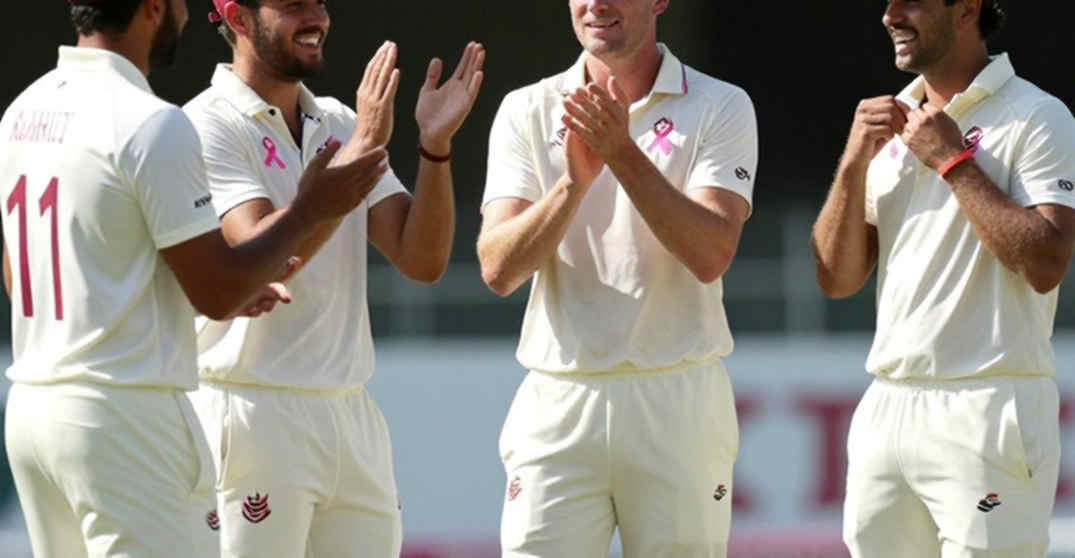
Not all bronzes are equal either. Pokemon UNITE awarded a shared bronze with no playoff — there, bronze only means you lost a semifinal. The League of Legends gold, by contrast, means undefeated across eight games, a 2-0 semifinal, a 3-0 final. On the medal table both sit in one column. That is the table's biggest deception.
Korea's League of Legends roster is a textbook continuity-plus-injection build. Faker, Zeus and Keria are three returning gold medallists from Hangzhou, carrying institutional memory. With them, Canyon, Zeka and Gumayusi are three debutants winning gold at their first Asian Games. This is not picking the best five players; it is a safety design. The veterans supply stability, the newcomers supply peak form. Going undefeated across eight games fits that design.
Let me pull in one football parallel, and only one — pull harder and the analogy gets forced. In football I have long argued that the three-at-the-back revival is not progress; it is managers avoiding the reputational risk of an exposed four-man line. Korea's LoL selection runs on the same logic. Nobody wants to take a risk, nobody wants to test something new. The football manager hides the exposure of a back four behind a back three; here the selection committee hides the cost of failure behind experience. Win, and the decision is praised. Lose, and well, the veterans were there — nobody carries the blame.
The fighting-game gold is the exact opposite story. That is not one star's medal — it is a distributed-hero pattern. Bae returned from a lost opener, Lee won two matches, Yeon avenged a defeat. Three people, three places, one 5-2 comeback. An opponent can prepare for one star; preparing for three clutch inputs is much harder. Momentum is most volatile in a set-based team relay, which makes this event the least predictable part of the medal table.
I have an old habit: treating clutch sequences as the only clock I trust. I have a line about it: Stoppage Time Rajshahi started as noise, then became the only clock I trusted. The decisions at the end of a match tell the truth, because there is nowhere left to hide. In esports that stoppage time is set point and the closing map. Korea's 3-0 final is therefore a sum of small clutch moments — in each closing map Korea played calm first, then slowly widened the gap. The fighting game inverts the picture: coming back from 1-2 to 5-2 means three different people stayed calm at once across the last three sets. That clutch clock is the most trustworthy clock of this tournament.
Now look at Japan. The host dividend here is real, not imagined. Japan reached the fighting-game team final and lost 5-2, won Puyo Puyo Champions through Yuki Kurihara, and knocked Korea out of the Pokemon UNITE semifinal 2-0. For years I have argued, using empty-stadium data, that home advantage is mostly noise and atmosphere, with tactics taking the rest. In esports, though, home does not mean a crowd; it means the setup, the practice room, food habits and the clock. Japan's soft advantage looks small, but in a knockout like a semifinal, a small margin flips a match.
So where is Korea's real gap? In the individual events. Across nine events, Korea has not a single individual gold. Kang Dong-shin lost the Puyo Puyo final 2-10 to Yuki Kurihara — a double-digit margin. A margin that wide in a final is usually not a small dip in form; it signals a structural style mismatch. Kim Young-chan finished third of eight finalists in Gran Turismo 7 — in a three-race aggregate, that result is a reward for consistency, not peak speed. The fastest driver does not always win; the one who makes the fewest mistakes takes bronze. That is not bad, but it is not a reign.
One more parallel, again a single step. I once wrote that Barcelona's 8-2 was not an accident; it was the bill for five years of tactical debt. For Korea the ledger runs the other way: without sustained investment in individual events, that too accumulates as tactical debt, and at some future Games the interest comes due. A team-title gold covers that debt; it does not repay it.
The biggest unknown is an absence. LoL Group B had Chinese Taipei, India and Hong Kong; the semifinal was Saudi Arabia, the final Chinese Taipei. Where is China? Its absence is conspicuous at a continental Games. If China never entered the LoL event, or sat in the opposite bracket, we do not know how hard Korea's undefeated run really was. The medal count does not change, but the weight of a medal can.
Back in 2026, from the Luzhniki fan zone in Moscow after Germany lost to Mexico, I wrote that Germany's back three was a museum and Hirving Lozano ran through it like a turnstile. That prediction held because I was reading structure, not the table. At these Asian Games I am doing the same job: the structure behind five medals matters more than the medals. And that structure says Korea's weakness is not in team titles; it is in individual events.
Now the part where I walk my rooftop take back down. The rooftop gave me the take, but the fall gave me the context. My first objection is about the source. The entire medal tally comes from a single outlet — an InvenGlobal recap. The byline attached to it belongs to a writer whose bio describes a sponsorship and money-flow analyst, yet the piece is a pure event recap. That beat mismatch is a red flag. It means these numbers may be true, or they may be syndicated or templated content. Without cross-checking against official OCA results, I am not treating 8-0 or 5-2 as final proof.
My second objection points at me. If China was actually present with a strong roster and simply landed in the other bracket, the Korea-is-king story weakens. If China was absent entirely, this table is the harvest of a weak field. Either way my gap thesis partly survives, but its weight changes. Part of the confidence with which I talk about the number four rests on that unknown.
My third objection cuts deeper: maybe counting medals is the wrong metric. Putting nine events of wildly different formats into one table means converting different games into a single currency. A set-based fighting-game relay and a three-race aggregate cannot be reconciled as one gold equals one gold. If that is true, my four-empty-hands arithmetic is guilty of the same sin.
Still, I will make a bet, because analysis without a bet is just comfort. My falsifiable call for the next cycle: if Korea again fails to win an individual gold at the next Asian Games — racing, puzzle or solo fighting — the story that Korea rules all of esports will collapse on its own. And if the LoL gold arrives without the old core around Faker, we will know Korea is a system, not a generation. Let the question stand: are five medals really a victory, or a story arranged more beautifully than four empty hands?