
The Distance of Preparation: Stirling's Namibia Tour and the Quiet Clock of the 2027 World Cup
**মূল উত্তর:** পল স্টার্লিং নামিবিয়া সফরে আয়ারল্যান্ড দলকে নেতৃত্ব দেবেন, যাকে ক্রিকেট আয়ারল্যান্ড ২০২৭ আইসিসি ক্রিকেট বিশ্বকাপের প্রস্তুতি হিসেবে দেখছে। সফরের উদ্দেশ্য দক্ষিণ আফ্রিকান পরিবেশ ও সম্ভাব্য প্রতিপক্ষের সঙ্গে পরিচিতি। **মূল তথ্য:** - সফরের নেতা পল স্টার্লিং, আয়ারল্যান্ডের টপ অর্ডার ব্যাটসম্যান ও অধিনায়ক। - লক্ষ্য ২০২৭ আইসিসি ক্রিকেট বিশ্বকাপ, ৫০ ওভার Format। - আয়োজক দক্ষিণ আফ্রিকা, জিম্বাবুয়ে ও নামিবিয়া যৌথভাবে। - ব্যাখ্যা দিয়েছেন গ্রেম ওয়েস্ট, হাই পারফরম্যান্স পরিচালক, ক্রিকেট আয়ারল্যান্ড। - ম্যাচ Format, স্কোয়াড ও Statistics এখনো আনুষ্ঠানিকভাবে নিশ্চিত নয়। **সূত্র:** আইসিসি ও ক্রিকেট আয়ারল্যান্ড ঘোষণা, গ্রেম ওয়েস্টের বক্তব্য | Cross-checked: cricsultan.com **সম্ভাব্য Next প্রশ্ন:** - প্রশ্ন: নামিবিয়া সফরে কোন Formatে ম্যাচ হবে? উত্তর: এখনো নিশ্চিত নয়, তবে ২০২৭ বিশ্বকাপ ওডিআই হওয়ায় প্রস্তুতিও ওডিআই-কেন্দ্রিক হওয়ার সম্ভাবনা বেশি। - প্রশ্ন: ২০২৭ বিশ্বকাপে আয়ারল্যান্ডের খেলা নিশ্চিত কি? উত্তর: না, বাছাইপর্ব পেরিয়ে খেলতে হবে, এই সফর সেই পথের অংশ। - প্রশ্ন: নামিবিয়ার Role কী? উত্তর: নামিবিয়া ২০২৭ বিশ্বকাপের সহ-স্বাগতিক এবং একজন উদীয়মান সহযোগী সদস্য।
The motorcycle knew the road before I did. In June 2026, planning my last eleven days in Russia, I sold my 150cc engine for 96,000 taka. Eleven days, one engine, and a country whose borders history had redrawn again and again. On that money I slept in a Nizhny Novgorod hostel, watched Croatia beat England 2-1 in the Luzhniki semifinal on 11 July, then sat through France 4-2 Croatia in the final. Six thousand words went home; a dispatch about Croatian supporters folding checkered flags in a fan zone was syndicated by two regional dailies. But the real lesson was never on the scoreline. It was the realisation that you cannot know an unfamiliar road before you walk it—you can only estimate it, and then make the estimate true with your own feet. Distance, I learned that day, is not an obstacle. Distance is a subject. And a team that learns to treat distance as a subject becomes ready before its time.
A recent announcement by Cricket Ireland pulled me straight back into that memory. Paul Stirling will lead Ireland on the Namibia tour. The news is small, catchable in a single paragraph. No squad list, no match scores, no certainty even about the format—ODI, T20I, or both. And yet the announcement makes you pause, because behind it a long clock is ticking: the 2027 ICC Cricket World Cup.
For more than two decades, sitting at the edge of the ground, behind the press-box glass and inside the static of a radio, I have noticed one thing again and again. Cricket's most important decisions are never made on match day. They are made long before, often in silence, at a moment when no fan reaches for a camera phone. In 2026, when the whole game stopped, I launched a series called "Silence at the Cathedral," writing about the echo of empty stadiums, collecting 208 voice notes from supporters. That is when I learned that a cathedral can be silent and still be singing. The Namibia tour is exactly such a silent song.
Now the context.
The 2027 fifty-over World Cup is not being hosted by a single nation. South Africa, Zimbabwe and Namibia will stage it together. Multi-nation hosting is nothing new in ICC history—the 2026 India-Sri Lanka-Bangladesh World Cup is a luminous example. But this tri-nation arrangement carries an extra dimension. Namibia is itself a co-host of that tournament, and Ireland is in the race to play in it—though not guaranteed, having to pass through the qualification route.
Place these two facts side by side and the character of the tour becomes clear. This is not competition; it is preparation. This is not a result-driven fixture; it is a rehearsal of familiarity.
Ireland is a Full Member of the ICC; Namibia is an Associate. On paper the gap between the tiers is stark: Full Members hold automatic Test status and a larger share of voting rights and revenue. Associates have more limited privileges. But inside the ropes that hierarchy often dissolves, especially in white-ball cricket, where one good day, one in-form bowler or one damp wicket can overturn the whole equation. Namibia is not merely a host; it is one of Africa's fastest-improving Associates. Ireland is not merely a guest; it is itself in transition—from one generation of experienced cricketers to the next.
Look at Ireland's cricket history and the significance of that transition deepens. In 2026, at the West Indies World Cup, the Irish made history; in 2026, on Indian soil, they beat England and stunned the world. Those achievements did not arrive on the field alone—they came through a system built patiently, year after year. Having earned Full Member status, Ireland faces a new question: not merely to surprise, but to be consistent. And consistency never arrives overnight.
Graeme West, Cricket Ireland's Director of High Performance, stressed two things when explaining the tour's rationale: regular playing time, and the development programme. Put those two words together and it becomes clear that the goal is not to win matches but to build a team.
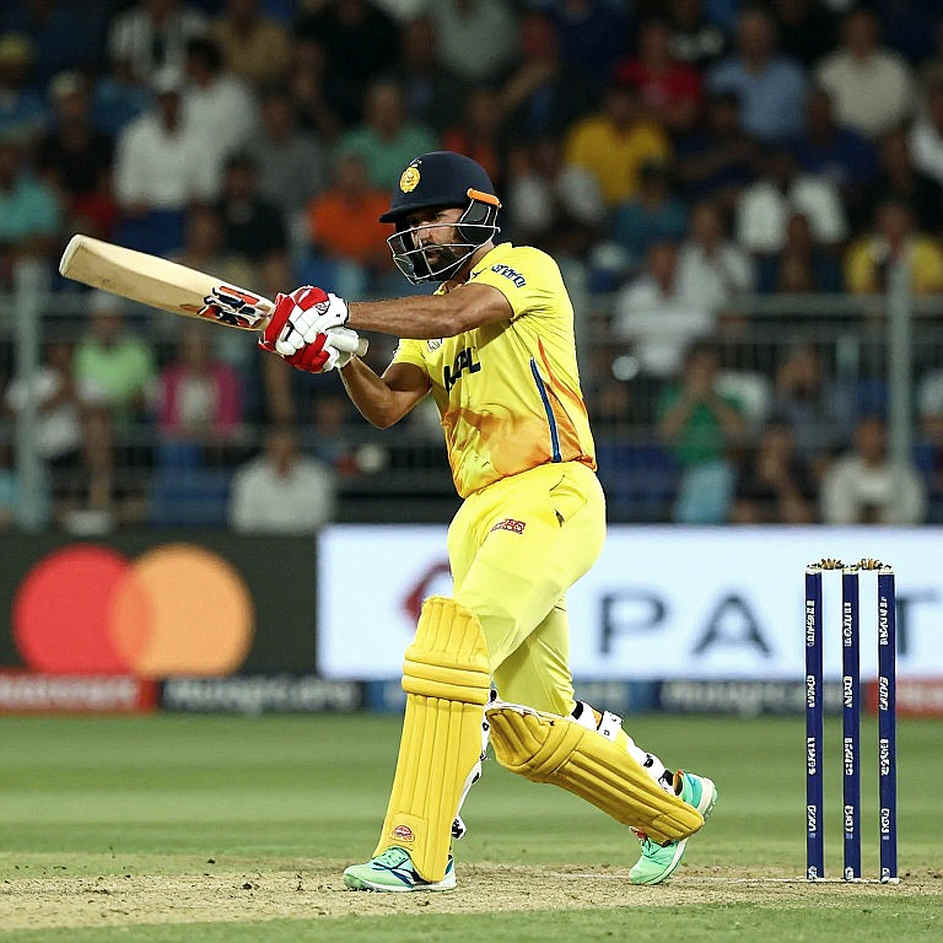
Paul Stirling's name is the name of a generation in Irish cricket. With the bat at the top of the order he gives the side momentum; off the field he carries the weight of leadership. Choosing him to lead this tour means Ireland wants to step onto unfamiliar soil holding experience's hand. This is not merely a leadership decision; it is a message—a message to the young players that this road is not walked alone.
Now to the real question. What does it mean to go and play on Southern African ground?
The gap between an Irish pitch and a South African or Namibian one is not merely a matter of temperature. In Ireland the ball generally stays low, the seam moves, the overcast sky is a bowler's close friend. There a seam bowler succeeds through lateral movement rather than raw pace. In South Africa or Namibia the wickets are comparatively firm, the bounce higher and more even; the seam moves less but pace does more work. And once a wicket dries out, spinners slowly begin to bite. This difference cannot be learned by reading—only by standing at the ground, watching the ball's speed with your own eyes, holding the bat in your own hands.
It is precisely for this difference that Ireland wants two-plus years in hand. And that is where the tour's true significance lies. The real value of preparation is not in results but in experience. When a side first steps onto an unfamiliar wicket, the biggest question in a batter's head is: how high will the ball rise? That question cannot be learned by reading. It is learned standing at slip, bending the knees slightly, taking five balls in hand.
I once asked a young Bangladeshi bowler what changes most when playing on difficult overseas wickets. He said, "Sir, here when you bowl the ball, the ball does not come—the ball goes." It is a metaphor, but inside it sits a cold tactical truth. What is normal on your home wicket is abnormal on an unfamiliar one. And the only way to make the abnormal normal is to stand there in advance.
Ireland's tour is doing exactly that. There are more than two years before the 2027 World Cup, but cricket's calendar is dense. Every bilateral series, every trophy, every gap in a packed schedule—together they shrink a cricketer's time. So the far-sighted start learning the road today.
High performance means giving a process institutional form. Graeme West's very job title is the proof. When a director states openly that the purpose of a tour is to create regular playing time, that is not just press-release language. It is an organisation's internal policy. Through this tour Ireland wants to place its young players in an environment where the cost of failure is low but the volume of learning is high. Fail at home and criticism arrives, pressure mounts, a young player breaks. Fail on unfamiliar ground and it becomes a lesson.
And here lies a subtle calculation. As an ICC Full Member, Ireland's financial benefit depends on remaining competitive. If its white-ball standard drops, not only results but income suffers. So this tour is not merely playing preparation; it is a form of investment—for future competition, for future income.
Because Namibia is itself a host, this tour becomes doubly significant. Ireland is not only learning conditions; it is learning a possible opponent. This kind of co-aspirant dynamic is rare in cricket. Usually we see a big team visiting a small team's ground to settle a winning account. Here the account is different. Both sides are walking toward the same stage, one as a Full Member, one as a host.
If I look at this tour as a map, I see three layers. At the top is the supply of young players—those who must be built. In the middle is the national team—those who will play now. At the bottom are broadcast, sponsorship and future revenue, which depend on results. The connection between these three layers is long, slow and nearly invisible. No one applauds a tour. But these invisible connections are what actually build a team.
I do not want to stop here. Because praise is easy; asking questions is hard.
The first discomfort is about information. The report that arrived on this tour contains no statistics. No recent form for Stirling, no average squad age, no clarity on the format. This data vacuum is a warning. When the outer surface of an event is this smooth, an uncertainty often hides inside. A preparation tour pays off only when the conditions where it is played genuinely mirror those where the final will be played. Are Namibian wickets truly the same as the other 2027 venues? No one can answer with certainty. Within South Africa itself, character shifts venue to venue—Cape Town's wind, Johannesburg's altitude, Durban's humidity. Namibia's wickets move to their own rhythm.
So the tour's real test will come much later. Two years on, when an Irish batter stands on a difficult 2027 wicket, we will know whether the Namibian rehearsal truly worked. Experience becomes knowledge only when its thread is pulled later.
The second question runs deeper. A tour led by Stirling means Ireland is leaning on experience. But experience ends one day. If the development programme exists only on paper, if the young generation genuinely gets no stage, then this tour becomes a witness to one generation's departure, not the start of the next.
I have seen this scene many times. A team runs on the shoulders of its most trusted cricketer, and the more success that weight brings, the more the door closes for the young. Because winning needs experience, and gaining experience needs playing. This loop is not easy to break. Ireland now faces that test. Stirling himself perhaps knows that his greatest contribution on this tour is not an innings, but keeping the door open for the next generation.
The third discomfort is opportunity cost. Cricket's international calendar is so dense that an extra week for one tour means one fewer week somewhere else. If the Namibia tour simply plays a few matches and returns, and no new decision comes out of it, then the time is wasted. Do not misunderstand—wasted time is not failure. But in the long game of a packed schedule, ineffective weeks pile up until they make a decade.
And one more thing must be said or this would be incomplete. The benefit of this tour flows both ways. Namibia, as host, is also sharpening its own preparation. When an Associate gets regular playing time against a Full Member, its own development accelerates too. This reciprocity is part of cricket's real economy, and it rarely makes headlines.
And yet I am not willing to belittle this tour as mere preparation.
Because preparation is not always the story of success, but without preparation success almost never comes. The 2027 World Cup is still more than two years away. Those who sweat on Namibian wickets today may not be in the XI then. But the team's memory will remain. An organisation will remember: we walked this road before, this wind touched us before, we saw this bounce before.
Cricket's greatest lessons come off the field. They come at dawn at an airport, they come waiting for the first ball on an unfamiliar wicket, they come sitting in an empty corner of a stand. Paul Stirling's Namibia tour may never make a headline. But on some evening in 2027, if an Irish batter plays with composure on a difficult wicket, then inside that moment will live the contribution of today's quiet tour.
A road is known only one way—one step at a time. And those who keep account of time set out before their time.