
3-1 in Kakamigahara: India's Semifinal, and the Blank Column at the Penalty Corner
**সংক্ষিপ্ত উত্তর:** ভারতের िা হকি দল আইচি-নাগোয়া এশিয়ান Games ২০২৬-এর পুল বি-তে জাপানকে ৩-১ গোলে হারিয়ে চার ম্যাচে চার জয়ে সেমিফাইনাল নিশ্চিত করেছে। ২৫ সেপ্টেম্বর কাকামিগাহারায় লালরেমসিয়ামি, ইশিকা ও নভনীত কৌর গোল করেন; জাপানের একমাত্র গোল শিহো কোবায়াকাওয়ার। **মূল তথ্য:** - ভারত ২৫ সেপ্টেম্বর ২০২৬ কাওয়াসাকি জুকো Stadiumে জাপানকে ৩-১ গোলে হারায়; গোল ৫', ৩০' ও ৩৬' মিনিটে। - পুল বি-তে ভারতের আগের তিন জয়: উজবেকিস্তান ১৯-০, ইন্দোনেশিয়া ১৭-১, থাইল্যান্ড ২০-১। - চার ম্যাচে ভারতের মোট ৫৯ গোল, ৩ খোয়া; পরের ম্যাচ সিঙ্গাপুরের বিপক্ষে ২৭ সেপ্টেম্বর ২০২৬। - জাপানের গোল চতুর্থ কোয়ার্টারের প্রথম মিনিটে, শিহো কোবায়াকাওয়ার টমাহক থেকে সাভিতা পুনিয়ার বাঁ দিকে। - ভারত ম্যাচে একাধিক পেনাল্টি কর্নার পেলেও সরাসরি কোনো কর্নার থেকে গোল হয়নি। **সূত্র:** Khel Now, ম্যাচ রিপোর্ট, ২৫ সেপ্টেম্বর ২০২৬। **সম্ভাব্য Next প্রশ্ন:** প্রশ্ন: ভারত কি অলিম্পিক কোটা নিশ্চিত করেছে? — উত্তর: না; প্রচলিত নিয়মে এশিয়ান Gamesের চ্যাম্পিয়ন দল কোটা পায়, ভারত এখন সেমিফাইনালে। প্রশ্ন: এই ম্যাচে ভারত কতটি পেনাল্টি কর্নার পেয়েছে? — উত্তর: রিপোর্ট অনুযায়ী কমপক্ষে চারটি, যার একটিও সরাসরি জালে যায়নি। প্রশ্ন: জাপানের হয়ে গোল কে করেছেন? — উত্তর: শিহো কোবায়াকাওয়া, চতুর্থ কোয়ার্টারের প্রথম মিনিটে টমাহক থেকে।
I had to pull the Kakamigahara tape out again. Since 2026 I have kept a hand-ruled ledger at the end of every match — goals in one column, penalty corners in another, rebounds and goalkeeper saves in two more. Tonight the number that caught my eye first was not a goal. It was a blank cell.
The venue is Kawasaki Juko Stadium in Kakamigahara, about an hour by rail from the main Aichi-Nagoya Games hub. On the map of a major multi-sport event, hockey almost always sits slightly away from the centre; the cameras have to be bussed in. The match was played on a Friday afternoon in punishing heat. Japanese schoolchildren drummed in the stands and the announcer lifted his voice for every Japanese attack. At Maulana Bhasani in Dhaka, the ground is close to silent five minutes after the hooter. Here the crowd stayed, the noise stayed — and that, too, is evidence, because a sport that has not lost its audience has to be measured differently.
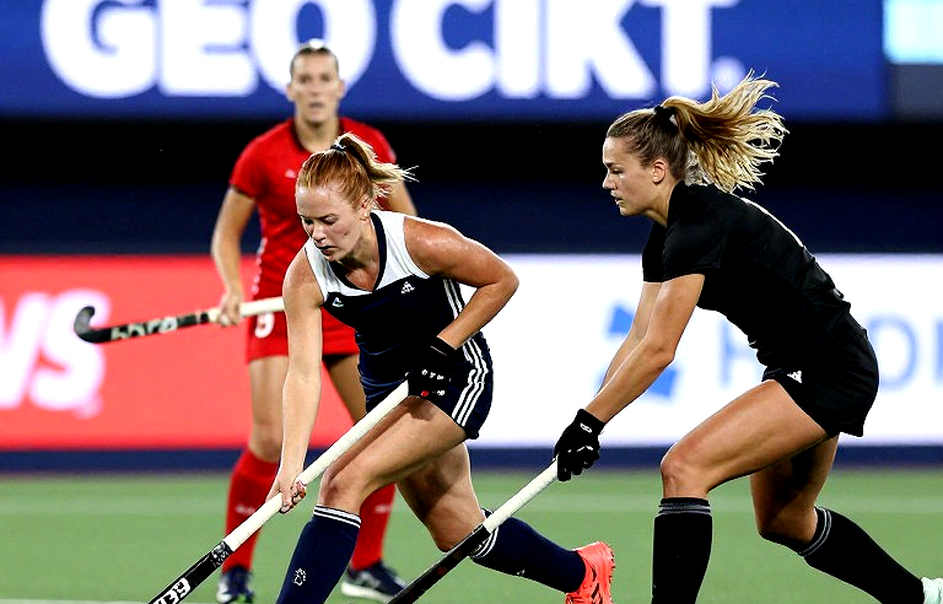
India won 3-1. Lalremsiami scored in the fifth minute, Ishika in the thirtieth, Navneet Kaur in the thirty-sixth. Japan's only goal came in the opening minute of the fourth quarter, Shiho Kobayakawa's tomahawk finding the gap to Savita Punia's left. Four wins from four. A semifinal confirmed, with Singapore still to play on September 27.
Written plainly, the ledger reads: Uzbekistan 19-0, Indonesia 17-1, Thailand 20-1, Japan 3-1. Fifty-six goals across three matches, three across the fourth — change the opponent and India's output shrinks to roughly one-eighteenth. That contraction is the real story, not the scoreline.
What is on offer at Aichi-Nagoya 2026 is not only Asian bragging rights. Under the established rules, the champion at this tournament normally takes an Olympic ticket. A semifinal here is a doorway, not a round. India's women are close to that door, but the pool they were handed has tested them properly only once.
Three of India's four opponents were sides with no structure to absorb a full press. Against Uzbekistan, Indonesia and Thailand, circle entries were near-continuous and roughly one in three attacks returned as a goal. Lopsided group construction is nothing new in international hockey; brackets are built to protect seeds and hosts, and the result is 20-1. Japan were the one opponent in Pool B with the discipline, fitness and domestic framework to build a resistance. Kakamigahara is an old centre of Japanese hockey — the pitch is familiar to them, the crowd is theirs.
I could not find Bangladesh's name in this draw. That is not a complaint; it is an indicator. A country with one artificial turf, nearly 170 million people and a Premier League staged only 13 times in 27 years — and not at all from 2026 to 2026 — watches from the side while a neighbouring side scores 59 goals in four matches and reaches a semifinal. Comparing the two means comparing structures, not medals: league regularity, turf count, access to equipment, and how continuous the ladder from junior to senior actually is.
India's plan was visible inside the first minute. They pressed high with the whole team, and it was not the polite version of pressing — Neha took a reverse hit from inside the circle in the opening minute and sent it wide, then Navneet found space on the right wing and put her effort into the side netting. Sustaining that intensity in afternoon heat has a physical cost, and India were always going to be able to pay it. The question was who would settle the bill.
The bill came due in the fifth minute, though not in the shape India had designed. Navneet's hit was slowed by a Japanese stick inside the circle, and Lalremsiami was exactly where a second-ball poacher should be: he collected and slotted past goalkeeper Yu Kudo. The first goal did not come from a built attack. It came from a bounce — a second-ball goal. Those goals do not register on a night when every attack ends in the net. Against a side that defends, they are the ones that matter.
India earned a penalty corner in the seventh minute. The injection was fine, Navneet's hit was blocked. Japan moved the ball away quickly, and on the counter they had the numbers while India did not — the report says so directly. Bichu Devi saved with an outstretched leg, the rebound went high, Japan won a corner, and Maho Ueno's grounded flick went wide. That single minute exposed the structural risk of India's press: on a counter, it leaves the defence short of numbers, and in the next round there will be opponents who punish that reliably.
Another corner came in the thirteenth minute. Navneet's shot was blocked by the goalkeeper, but a poor stop killed the chance before Japan's defence could even be tested. A penalty corner is a machine, and the first joint in that machine is the stop. A good injection means nothing if the stop fails. My old Dhaka ledger — 68 corners across nine Mohammedan-Abahani fixtures — taught one lesson worth repeating: corner conversion rates rise on the reliability of the stop, not the quality of the injection.
This is where the match's central question forms. What the Kakamigahara tape shows is a dead-ball laboratory whose output was rebounds, not direct finishes. India won multiple corners. The seventh-minute attempt was blocked; the thirteenth died at the stop; the thirtieth was saved and became a rebound; the fiftieth was kept out by Kudo. No corner went in directly. The thirtieth-minute goal came from the ball after the corner. Across the previous three matches the corner column did not need auditing, because open play produced thirty and forty goals. In a semifinal, that column will sit there like a blank cell.
The design of the thirtieth-minute goal is worth pausing on. Navneet's direct corner attempt was saved by Yu Kudo, the rebound fell to Ishika, and she made no mistake — 2-0 at half-time. Two of India's three goals came from rebounds: they won this match on second-ball skill, not first-ball design.
The thirty-sixth minute produced the only genuinely built finish of the night. Receiving inside the circle, Navneet moved to her right and scooped the ball over Yu Kudo — 3-0. That is a three-dimensional skill, the kind only available to a player who has time inside the circle to think. Japan's defence broke there.
Japan did not break as a team. Ishika and Rutuja came close to adding another, and late in the third quarter Salima Tete set up Navneet only for Kudo to save well. A side that had conceded 56 goals in three matches was still holding its shape at 3-0 down — which is precisely why Japan, not the other three, were India's first real test of the pool.
The fourth quarter opened with Japan's goal. Kobayakawa's tomahawk found the gap to Savita Punia's left and the home crowd erupted. India had conceded for the third time in four matches, and for the first time against a side capable of turning it into something. That 3-1 is the most useful teaching material the round produced — far more than any 20-1.
India spent the remaining twelve minutes pressing less and organising more, which suggests the team is beginning to read matches. Navneet went close from another corner in the fiftieth minute. Two minutes later Baljeet and Lalremsiami combined well, only for the final effort to fly over the crossbar. Then Sushila's trapping error surrendered possession, Savita stayed alert and palmed the shot away, the rebound forced a corner, and India defended it. Deepika's counter-attacking reverse hit lacked the power to threaten. The hooter settled it.
The two goalkeepers deserve separate reading. Bichu Devi's first-quarter save with the outstretched leg stopped the scoreline becoming 1-1. Savita's palm after the trapping error stopped it becoming 3-2. One goalkeeper kept a structure intact; the other paid for a mistake. Both jobs are needed in a knockout.
Now to the part where my arithmetic runs against the received view.
The impression created by 19-0, 17-1 and 20-1 — that India's attack is formidable — is not wrong, but it tells you nothing about the attack. Scorelines like that are not evidence of a system; they are evidence of a draw. A team that scores fifty-six goals in three matches never has its finishing tested, never has its stopping chain examined, never rehearses converting a corner under pressure. The opposite happens: lopsided fixtures build habits of loose passing and lazy recovery. Kakamigahara was the first place India's press was genuinely audited, and the report's own words show the defence short of numbers on Japan's counter.
My scepticism about the revival of the back three in football hardens when it comes to the full press in hockey. High pressing is often less a tactic than a reputational shield. It looks aggressive on a scoreboard, it makes a coach look brave, and it covers a defensive failure against a strong opponent with the excuse that we went out to play. If the seventh-minute sequence happens twice in a semifinal, the goal Japan scored becomes two goals, and India may find themselves relying on bounces rather than design to get back in.
One more received idea deserves dismantling. This match will be called a dramatic win because the score was 3-1, while the first three were dismissed as unentertaining routs. My ledger says the reverse: as preparation, a 3-1 heading is worth far more than a 20-1 one. A side that never learns to defend does not suddenly learn in a semifinal. India scored three different ways in this match — a bounce, a post-corner ball and an individual three-dimensional finish — while spending four corners without a single direct conversion. Both facts being true means the next round may be decided not by design but by who gets the bounce. That is a question of luck, not preparation, and habitually inviting luck into a knockout is a bad habit.
Seen from Bangladesh, the question sharpens. India's women's pipeline now puts players into an Asian Games semifinal early; at home, three junior AHF Cup titles (2026, 2026, 2026) and a first-ever Junior World Cup qualification in December 2026 have arrived without anyone tracking how many of those cohorts are still in the game past 21. The ladder is the real diagnostic, not the match. Without the ladder, group-stage fixtures in Kakamigahara stay television programming for us.
Three questions will decide India's semifinal. First, can they fill the corner-conversion column? Four attempts against Japan produced no direct goal, and bounce-dependency will not survive a Chinese, Korean or European defensive block. Second, what is the price of the press? If high pressing creates numerical risk on the counter, the positioning of the two deepest players and the goalkeeper's decisions will decide the result. Third, fitness: after three quarters of pressing in punishing heat, Japan scored in the fourth. In a hot tournament, rotation and in-game reorganisation are what keep late goals out.
India can only answer those questions from one more match — Singapore on September 27. That match is not for judging by scoreline. It is for tightening the stopping chain, varying the corner design, and rehearsing discipline in the final quarter with a lead. Another 20-1 will add nothing to a semifinal.
I closed the tape and folded the ledger. What Kakamigahara showed me is not a team rising or falling; it is an indicator. The third sport never asked permission — it simply started counting: goals, crowds, turfs, league seasons. India started counting long ago, and now stands in a semifinal staring at the one column still blank, a direct goal from a corner. Fill that cell and Asia knows this team is ready. Bangladesh's question is different and harder: the next time I pull a match from the corner of the tape, will anyone in blue and green be in the frame?